How Do Crypto Debit Cards Work?
Learn how crypto debit cards convert cryptocurrency to fiat currency instantly. Explore fees, tax implications, safety, and top providers in 2025.
Last updated: November 6, 2026
What Is a Crypto Debit Card?
A crypto debit card is a payment card, physical or virtual, linked to a cryptocurrency wallet or exchange account that lets you spend crypto at any merchant that accepts Visa or Mastercard. The card provider converts your cryptocurrency into fiat currency (government-issued money like USD, EUR, or GBP) when you make a purchase, so the merchant receives regular money while your crypto balance decreases.
You can spend crypto with a debit card anywhere that accepts Visa or Mastercard. The merchant does not need to accept cryptocurrency directly and never knows the payment started as crypto. From the store's perspective, the transaction looks identical to any other card payment. This means your crypto debit card works at grocery stores, gas stations, online retailers, and restaurants across the globe.
Contents
- What Is a Crypto Debit Card?
- How Crypto Debit Cards Work
- Types of Crypto Debit Cards
- Benefits of Using a Crypto Debit Card
- Drawbacks and Risks
- Crypto Debit Card Fees to Watch Out For
- Tax Implications of Spending Crypto
- Are Crypto Debit Cards Safe?
- Best Crypto Debit Cards Compared
- How to Get a Crypto Debit Card
- Crypto Debit Card FAQ
How Does a Crypto Debit Card Work?
A crypto debit card converts your cryptocurrency into fiat at the moment you make a purchase (or beforehand, depending on the card type), then settles the payment to the merchant through the Visa or Mastercard network. The process breaks down into four steps.
Step 1: Fund Your Crypto Wallet
You start by depositing cryptocurrency into your exchange account or the wallet linked to your card. Most cards support BTC and ETH, along with other popular tokens. You can also load stablecoins, which are cryptocurrencies designed to maintain a 1:1 value with the US dollar (e.g., USDT, USDC). Loading stablecoins is a practical strategy if you want to avoid price swings between the time you fund your card and the time you spend. Because stablecoins hold a steady dollar value, your spending power stays predictable.
Step 2: Swipe, Tap, or Pay Online
You use the card the same way you use any traditional debit card. Tap it at a contactless terminal, swipe at a register, or enter the card number for an online purchase. Nothing about the payment experience changes for you or the cashier.
Step 3: Instant Crypto-to-Fiat Conversion
This is where the card differs from a regular bank card. When you tap your card for a $50 purchase, three things happen behind the scenes:
- The card network (Visa or Mastercard) processes the fiat payment request from the merchant terminal, just like any other card transaction.
- The card issuer's banking partner settles the fiat payment to the merchant's bank account in local currency.
- The crypto exchange (e.g., Bybit) debits your wallet, selling $50 worth of crypto at the current market rate to cover the fiat that was sent to the merchant.
The exchange handles all blockchain-related steps internally, so you do not pay separate network fees or wait for block confirmations. The entire conversion and settlement takes seconds from the cardholder's perspective.
Step 4: Merchant Receives Fiat
The merchant receives regular fiat currency in their bank account. They never interact with crypto at any point. Whether you need to sell your crypto before spending depends on the card type: auto-conversion cards sell crypto at the point of sale (as described above), while pre-loaded cards require you to convert crypto to a fiat balance on the card before you shop. The next section explains this difference in detail.
Types of Crypto Debit Cards
Crypto debit cards fall into two main categories based on when the crypto-to-fiat conversion happens: pre-loaded cards and auto-conversion cards.
Pre-Loaded (Top-Up) Cards
A pre-loaded card (also called a top-up card) requires you to manually convert crypto to fiat and load that balance onto the card before spending. The card then holds a fiat balance, and purchases draw from that balance like a standard prepaid card. The advantage is predictability: once you top up, price swings in the crypto market do not affect your spending power. The trade-off is that you must plan ahead and manually reload when the balance runs low.
Auto-Conversion Cards
An auto-conversion card sells crypto automatically at the point of sale in real time. Your card stays linked to a crypto balance, and the provider converts just enough crypto to cover each purchase as it happens. This feels more like spending directly from your crypto holdings. The downside is that the exchange rate you receive depends on the exact moment of purchase, which introduces exposure to price volatility.
| Feature | Pre-Loaded | Auto-Conversion |
|---|---|---|
| When conversion happens | Before you spend | At the point of sale |
| Volatility risk | None after top-up | Yes, rate fluctuates |
| User effort | Manual reload needed | Automatic |
Crypto Debit Card vs. Crypto Credit Card
A crypto debit card spends existing crypto holdings from your wallet. A crypto credit card extends a line of credit, sometimes collateralized by crypto you deposit as security. The spending mechanics differ: debit reduces your balance, while credit creates a debt you repay later. Most providers offer both virtual cards (issued instantly for online use) and physical cards (shipped for in-store payments and ATM access).
Benefits of Using a Crypto Debit Card
Crypto debit cards give you a practical way to spend your crypto holdings at millions of merchants worldwide without selling through an exchange and withdrawing to a bank account.
- Spend crypto without a complex off-ramp. Convert and spend in a single step instead of selling on an exchange, withdrawing to a bank, and then using a bank card.
- Accepted anywhere Visa or Mastercard works. This includes international merchants, so you can use the card while traveling abroad. Foreign transaction fees may apply depending on the provider.
- Earn crypto cashback. Many cards offer 1% to 8% cashback paid in cryptocurrency, such as BTC or the provider's native token.
- Withdraw cash from ATMs. Yes, you can pull cash from any ATM on the Visa or Mastercard network. Fees and daily limits apply.
- Support for multiple cryptocurrencies. Most cards accept BTC and ETH along with a selection of altcoins, giving you flexibility in which assets you spend.
- Stablecoin loading avoids volatility. Funding your card with USDT or USDC locks in a dollar-pegged value so your balance does not drop overnight.
Drawbacks and Risks
Crypto debit cards come with trade-offs that every user should weigh before signing up.
- Price volatility. If you hold BTC or ETH on an auto-conversion card, a sudden price drop reduces how much fiat your crypto can buy at checkout. The gap between funding and spending is where you carry risk.
Pro Tip: Loading your card with stablecoins like USDT or USDC keeps your balance pegged to the dollar, avoiding volatility surprises and potentially reducing your capital gains tax burden. See our guide on spending stablecoins with a crypto card for a detailed walkthrough.
- Potential tax liability on every transaction. Each time you spend crypto, it may count as a taxable disposal event. The tax section below covers this in detail.
- Fees can add up. Conversion fees, ATM fees, and monthly charges may exceed what you pay with a traditional bank debit card.
- KYC is required. Crypto debit cards operate on regulated payment networks, so identity verification is mandatory. Anonymous spending is not possible.
- Custodial risk. Most cards require you to deposit crypto into the exchange's custody, meaning the exchange holds your private keys until conversion.
Crypto Debit Card Fees to Watch Out For
Crypto debit cards charge several types of fees that vary by provider, and understanding these costs before you sign up prevents surprises.
| Fee Type | Typical Range |
|---|---|
| Conversion / exchange fee | 0.5% – 2.5% per transaction |
| ATM withdrawal fee | $2 – $5 per withdrawal (varies) |
| Monthly / annual card fee | Free – $5/month |
| Inactivity fee | $5 – $10 after 90+ days of no use |
| Foreign transaction fee | 0% – 3% |
| Card issuance fee | Free (virtual) / $5 – $10 (physical) |
Exact fees depend on the provider. Check the comparison table below for a side-by-side look at specific cards.
Most cards also impose daily and monthly spending limits that vary by provider and by your verification tier. ATM withdrawals typically carry both a per-transaction fee and a daily cap on how much cash you can pull.
Tax Implications of Spending Crypto
Spending cryptocurrency through a debit card is treated as selling that crypto in many jurisdictions. Each transaction may trigger a capital gains tax obligation. Capital gains tax is a tax on the profit you earn when you sell an asset for more than you paid. Every card swipe counts as a disposal (a taxable event), requiring you to calculate the difference between your original purchase price and the market value at the time of spending.
For example, if you bought BTC at $30,000 and spend it when it is worth $60,000, you owe tax on the $30,000 gain. This applies per transaction, not just on large purchases.
Stablecoins offer a practical workaround. Because USDT and USDC maintain a value near $1, there is little to no price appreciation between the time you acquire them and the time you spend them. That means the taxable gain is minimal or zero in most cases.
Crypto debit cards are legal in most countries where regulated crypto exchanges operate. Availability varies by provider and region, so check whether a specific card ships to your country before applying.
Tax treatment of cryptocurrency transactions varies by jurisdiction. This article provides general information only and does not constitute tax advice. Consult a qualified tax professional for guidance specific to your situation.
Are Crypto Debit Cards Safe?
Crypto debit cards carry the same Visa or Mastercard fraud protection as traditional debit cards, but the safety of your crypto balance depends on the card provider's custody model.
Fraud protection. Because these cards run on Visa or Mastercard rails, you benefit from standard dispute resolution and chargeback rights. If someone makes an unauthorized purchase, you can contest it through the card network.
Custody model. Most crypto debit cards are custodial, meaning the exchange holds the private keys to your crypto. Custodial storage is what enables instant conversion at the point of sale: the exchange can sell your crypto in milliseconds because it already controls the wallet. Self-custody (where you control your own keys) is an option with a small number of newer products, but these cards remain limited in availability and features.
Fund insurance. Crypto held in an exchange wallet is generally not insured by government deposit protection programs like FDIC (U.S.) or FSCS (U.K.). This is different from a traditional bank account, where deposits are typically protected up to a set limit. Choose a provider with strong security practices, including two-factor authentication, cold storage reserves, and the ability to freeze your card instantly through a mobile app.
If your card is stolen, you can lock it through the provider's app or website and request a replacement. The crypto in your exchange wallet is separate from the card itself, so freezing the card does not affect your stored funds.
How to Choose the Best Crypto Debit Card
Choosing the right crypto debit card means weighing fees and supported coins against reward programs and the card network each provider uses. The table below compares popular options available in 2026.
| Provider | Card Network | Conversion Fee | Supported Coins | Rewards / Cashback | Key Feature |
|---|---|---|---|---|---|
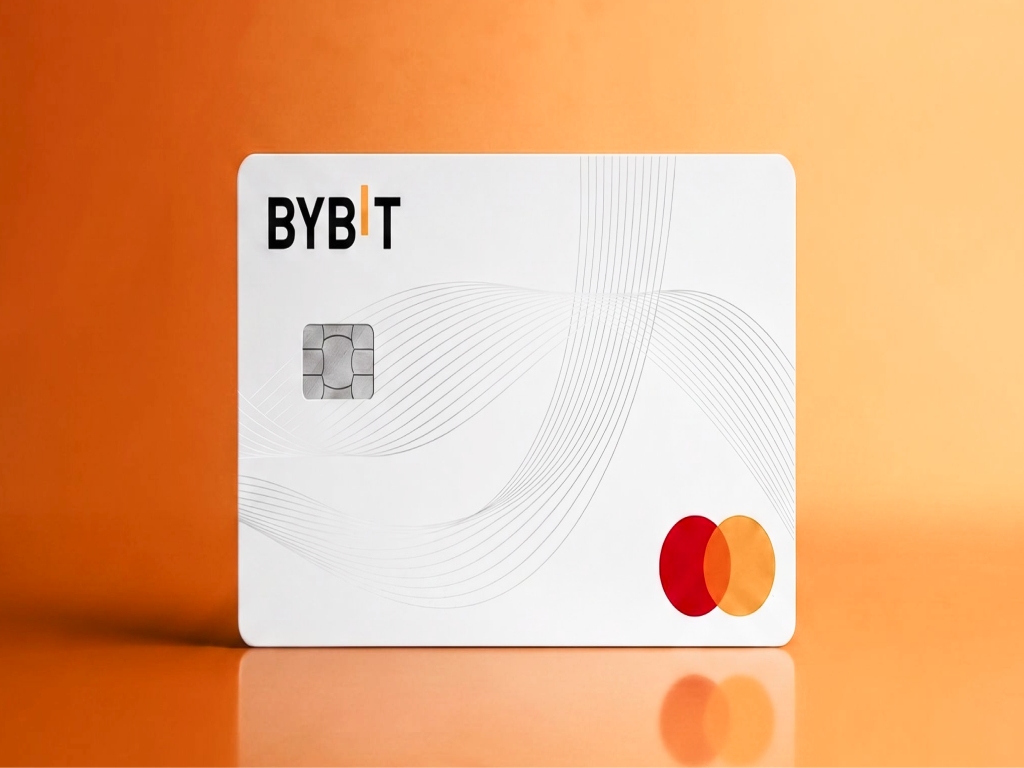
| Bybit Card | Mastercard | Check provider for current rates | Multiple including BTC, ETH, USDT | Cashback in crypto | Integrated with Bybit exchange accounts |
Crypto exchanges issue these cards by partnering with banking institutions that handle the fiat settlement side of each transaction. The exchange manages your crypto, the banking partner manages the fiat, and Visa or Mastercard provides the payment network that connects them to merchants.
For the latest fee details and supported regions, visit the Bybit Card product page or check each provider's website directly. Fee structures change, so verify current rates before you apply.
How to Get a Crypto Debit Card
Getting a crypto debit card takes about 10 to 15 minutes and follows a process similar to opening any exchange account.
- Choose a provider. Start with an exchange where you already have an account. This saves time on account setup and lets you fund the card from your existing balance.
- Create or verify your exchange account. If you do not have an account yet, sign up and complete email and phone verification.
- Complete Know Your Customer (KYC) verification. KYC is an identity verification process that requires a government-issued ID, proof of address, and sometimes a selfie. It exists because the card operates within the traditional banking system and must comply with anti-money laundering regulations. Every legitimate crypto debit card requires KYC.
- Apply for the card. Virtual cards are often issued instantly. Physical cards typically ship within one to two weeks.
- Fund your wallet. Deposit crypto into the card-linked wallet. BTC and ETH are supported by most providers. Loading stablecoins (USDT, USDC) is a practical option if you want to avoid price fluctuations. Regional availability varies, so confirm your country is supported before depositing.
- Start spending. Activate the card through the provider's app and begin using it at any Visa or Mastercard terminal.
If you want to get started with a card that connects directly to a major exchange, you can apply for the Bybit Card and fund it from your existing Bybit balance.
Crypto Debit Card FAQ
Crypto card vs debit card: what is the difference?
A traditional debit card draws fiat currency from a bank account. A crypto card draws from an exchange or wallet balance and converts the selected cryptocurrency into fiat for settlement. Both can use established card networks, but their funding sources, conversion fees, and tax considerations differ.
How do crypto debit cards work?
A crypto debit card converts your cryptocurrency to fiat currency when you make a purchase, then sends that fiat to the merchant through the Visa or Mastercard network. The exchange sells enough crypto from your wallet to cover the transaction amount at the current market rate.
Are crypto debit cards worth it?
For crypto holders who want to spend their assets without going through a manual exchange-and-withdraw process, a crypto debit card offers clear convenience. Weigh the benefits (global acceptance, cashback, ATM access) against the drawbacks (fees, tax events, custodial risk) to decide if it fits your spending habits.
Do you pay taxes when you use a crypto debit card?
In many jurisdictions, yes. Spending crypto is treated as a disposal or sale, which may trigger capital gains tax on any price appreciation since you acquired the crypto. Stablecoins can reduce this burden because they carry minimal price change. Consult a tax professional for rules specific to your jurisdiction.
What is the difference between a crypto debit card and a crypto credit card?
A crypto debit card draws from cryptocurrency you already own, converting it to fiat at the time of purchase. A crypto credit card extends a line of credit (sometimes collateralized by crypto), which you repay later. Debit reduces your balance immediately; credit creates a debt.
Can you withdraw cash from a crypto debit card?
Yes. You can withdraw cash at any ATM that supports the card's network (Visa or Mastercard). ATM withdrawals typically carry an additional fee of $2 to $5 per transaction and are subject to daily withdrawal limits set by the provider.
What are the fees for crypto debit cards?
Common fees include a conversion fee (0.5% to 2.5% per transaction), ATM withdrawal fees, monthly card fees, foreign transaction fees, and inactivity fees. Fee structures vary by provider, so compare cards before committing.
Is a crypto debit card safe?
Crypto debit cards include the same fraud protection as any Visa or Mastercard product, including dispute resolution for unauthorized charges. However, the crypto stored in your exchange wallet is generally not covered by government deposit insurance like FDIC. Choose a provider with strong security features such as two-factor authentication and instant card freeze.
Can I use a crypto debit card at any store?
Yes, anywhere that accepts Visa or Mastercard. The merchant receives fiat currency through the card network and never needs to know or accept cryptocurrency directly. This covers in-store and online purchases, as well as transactions abroad.