JackerJackk
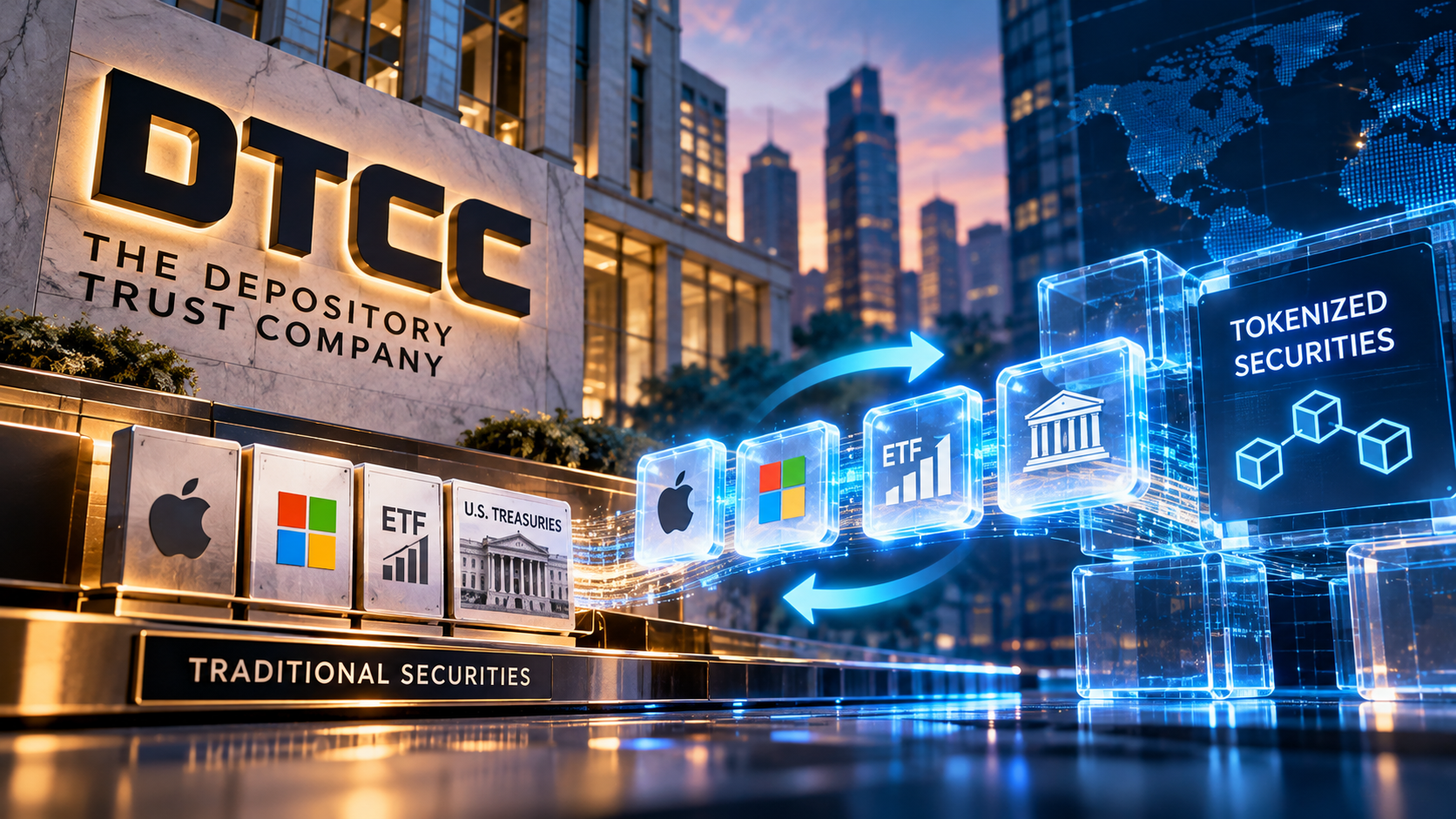
🚀 Wall Street Just Took a Big Step Toward Putting Securities on Blockchain. And this time, it's not just another experiment. On October 28, DTCC announced the launch of its Tokenization Service through its subsidiary, The Depository Trust Company (DTC). Why is this important? Because DTCC is a major part of the infrastructure behind traditional securities markets. Its new service allows eligible securities held at DTC to be represented as blockchain tokens, while preserving their existing ownership rights and investor protections. The initial eligible list includes 34 securities, covering selected stocks, ETFs and U.S. Treasuries. But here's the part that makes this different from the usual tokenization headlines. Participants can convert eligible holdings between traditional and tokenized forms, while tokenized securities remain recorded in DTC’s official books and records. The service currently supports Canton Network and DTCC's private Besu network, with additional blockchain integrations planned for 2027. There's a catch, though. This isn't permissionless trading for anyone with a crypto wallet. Participants must opt in, wallets must be registered, and transfers are restricted to registered wallets. DTCC says 20 participants have signed access agreements. So what's the bigger opportunity? Tokenized securities could eventually move more efficiently between traditional financial systems and blockchain infrastructure, potentially improving how institutions manage and transfer collateral. Those benefits still need to prove themselves in practice. The real milestone isn't that Wall Street discovered tokenization. It's that a major piece of Wall Street's existing infrastructure has now launched a service built around it. #RWA #Tokenization #Blockchain #TradFi
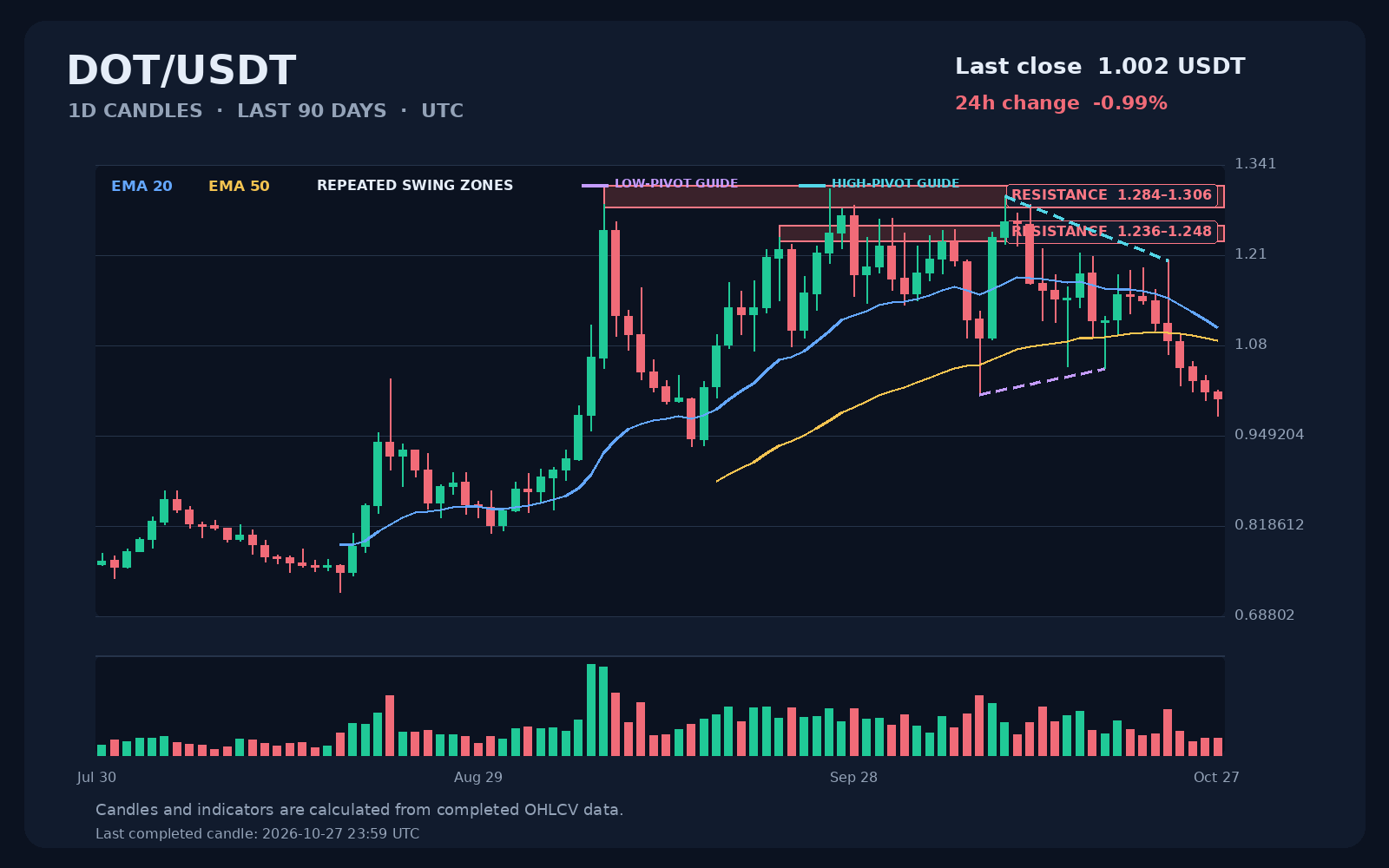
📉 DOT Is Back Near $1. And Buyers Are Losing Ground. Polkadot closed October 27 at $1.002, down 0.99% on the day. That puts DOT dangerously close to slipping below the $1 mark. But the bigger concern is what the chart is showing. Price is below both the 20-day EMA ($1.106) and 50-day EMA ($1.087). Interestingly, the shorter moving average remains above the longer one. Yet DOT is trading beneath both, showing that recent selling pressure has overwhelmed that technical advantage. The chart also shows lower swing highs, while price has fallen beneath a provisional rising swing-low guide. So what should traders watch? 🔹 $1.087–$1.106: Reclaiming both moving averages and holding above them on daily closes would be an early sign of improving strength. 🔹 $1.236–$1.248: The first repeated resistance zone. 🔹 $1.284–$1.306: A higher resistance zone tested three times. On the downside, a sustained move below $1 would reinforce the weak short-term picture. No repeated swing support zone has been confirmed, so treating any lower level as a guaranteed floor would be premature. Meanwhile, Polkadot has been changing its token economics. DOT now follows a capped issuance schedule, with supply growth designed to decline over time toward a 2.1 billion DOT cap. Staking has also become more flexible for nominators, with unbonding reduced from 28 days to approximately two days and nominator slashing risk removed. These are meaningful protocol changes, but they don't automatically translate into buying demand. Polkadot is improving its underlying economics. The chart, however, is still waiting for buyers to respond. #DOT #Polkadot #Crypto #TechnicalAnalysis
🇺🇸 The U.S. Wants Crypto to Help Keep the Dollar on Top. Crypto was once seen as a challenge to traditional finance. Now, a top U.S. official is talking about using it to strengthen America's financial influence. Speaking at Ripple Swell on October 27, Treasury Secretary Scott Bessent made the case for digital assets as a tool for extending the dollar's global reach. His biggest argument? Dollar-backed stablecoins. Bessent said more than 90% of stablecoins are backed by dollars. He argued that wider adoption could give people in countries with unstable currencies easier access to the dollar. There's another interesting angle. Stablecoin issuers often hold U.S. government debt as reserves. Bessent believes growth in the sector could create additional demand for U.S. Treasuries. In other words, crypto could help spread the dollar internationally while supporting demand for American debt. But there's a regulatory problem. With the Clarity Act failing to pass Congress, Bessent suggested Treasury could bring the SEC and CFTC together to move crypto oversight forward through agency action. He also pointed to regulatory safeguards as a possible way to address crypto businesses losing access to banking services. None of this means new rules have been approved. Agency action would also be less durable than legislation. Still, the shift in thinking is significant. The conversation is moving beyond whether America should accommodate crypto. It's increasingly about how crypto infrastructure could serve American economic interests. And stablecoins may be central to that strategy. #Crypto #Stablecoins #USD #USRegulation

🚀 The Nasdaq-100 Is Going Onchain. But There's a Catch. One of Wall Street's best-known stock indexes is entering the world of tokenized finance. Janus Henderson and Centrifuge have announced JQQQ, a tokenized fund designed to track the Nasdaq-100. The fund uses Centrifuge's tokenization technology on the Stellar blockchain. And here's what makes this interesting. This isn't simply someone creating a crypto token that follows stock prices. JQQQ is being presented as a licensed, issuer-sponsored investment fund, backed by a traditional asset manager. That's an important difference from third-party synthetic stock tokens. But don't mistake this for the Nasdaq-100 suddenly becoming available to everyone with a crypto wallet. Access is reportedly restricted to eligible professional investors outside the United States. And holding a tokenized fund doesn't mean directly owning the individual stocks in the index. So why does this matter? Until now, much of the attention around tokenized real-world assets has focused on Treasury products and private credit. JQQQ brings another category into focus: equity-index investment funds. Traditional finance isn't just experimenting with blockchain as a concept anymore. Asset managers are bringing recognizable investment products onto blockchain infrastructure. The big question is how far that model can expand while meeting the rules governing real investment funds. Wall Street isn't turning every stock into a cryptocurrency. It's exploring a new way to package and distribute familiar financial products. #RWA #Tokenization #Nasdaq100 #Stellar

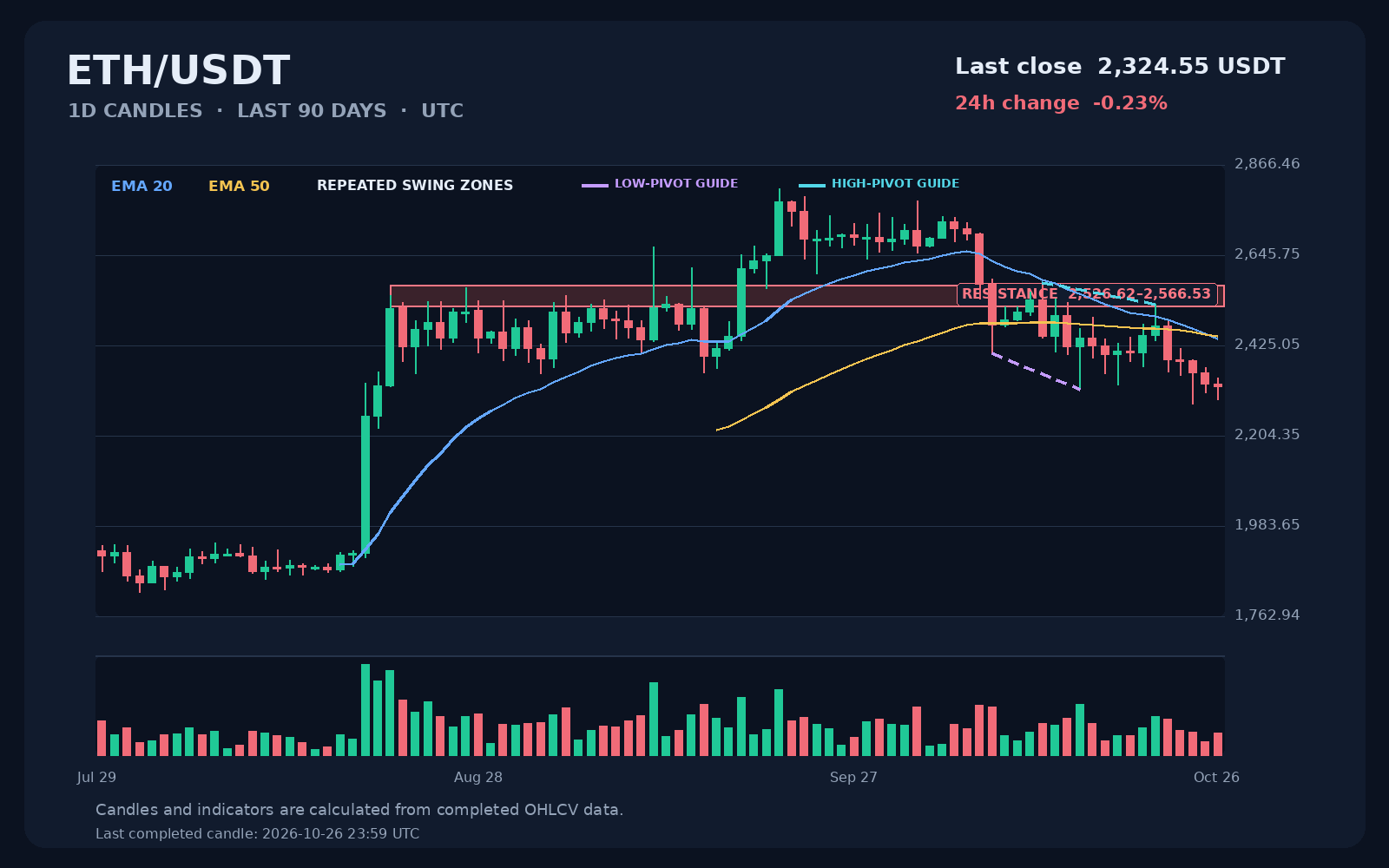
📉 Ethereum Is Building for the Future. But ETH Buyers Have a Problem Right Now. ETH closed October 26 at $2,324.55, down 0.23% for the day. That small decline isn't the main concern. The chart is showing something more important. ETH is trading below both its 20-day EMA ($2,440.90) and 50-day EMA ($2,447.32). Meanwhile, recent swing highs and lows have been moving lower. Buyers haven't shown enough strength to reverse that pattern. So what would change the picture? A recovery above both moving averages, followed by daily closes holding there, would be an encouraging first step. Beyond that, $2,526.62–$2,566.53 is the major repeated resistance zone, tested four times in the 90-day chart. On the downside, the recent swing-low guide reaches $2,318, an area worth watching. But it's a provisional chart reference, not confirmed support. If selling continues, the technical picture could weaken further. There is no verified repeated support zone in this 90-day window. Meanwhile, Ethereum's development roadmap has hit a delay. The Glamsterdam upgrade's planned October 26 activation on the Hoodi testnet was postponed while developers investigate possible smart-contract compatibility issues involving EIP-8037. No replacement testnet date has been announced. Glamsterdam aims to improve Ethereum's Layer 1 execution capacity, but these upgrades are not yet live on mainnet. And there's no verified evidence that the testnet delay caused ETH's recent price weakness. Ethereum's long-term development continues. For traders, though, the immediate question is simpler: can ETH reclaim its moving averages before the lower-high pattern extends? #Ethereum #ETH #Crypto #TechnicalAnalysis
🚨 Keystone's Security Breach Just Got More Serious. And This Time, It's About Trusting the Device Itself. Imagine buying a hardware wallet, checking that it's genuine, and getting a green light. Now imagine that check can no longer be fully trusted. That's the risk Keystone has revealed in its latest investigation update. The company says attackers obtained its WebAuth device-authentication key during a website breach. Why is that important? Because the compromised key could potentially allow counterfeit hardware wallets to pass Keystone's official authenticity check. Keystone is taking a major step in response: 🔹 18,835 unsold devices using the old key will be destroyed. 🔹 Unshipped orders are being paused. 🔹 New production will use a replacement authentication key. The investigation also identified 25,964 affected purchase records and 12,873 incomplete checkout records. Keystone says private keys, recovery phrases and transaction signing were not compromised. That's an important distinction. The exposed key was used to verify whether a device was authentic, not to sign transactions or generate private keys. There is no confirmed report here of counterfeit devices being discovered or customer funds being stolen. But the security concern is significant. A hardware wallet isn't just about protecting your private keys. You also need to trust that the device you're holding is genuine. And this incident shows how damaging a compromised verification system can be, even without a direct breach of wallet signing security. #Keystone #CryptoSecurity #HardwareWallet #SelfCustody

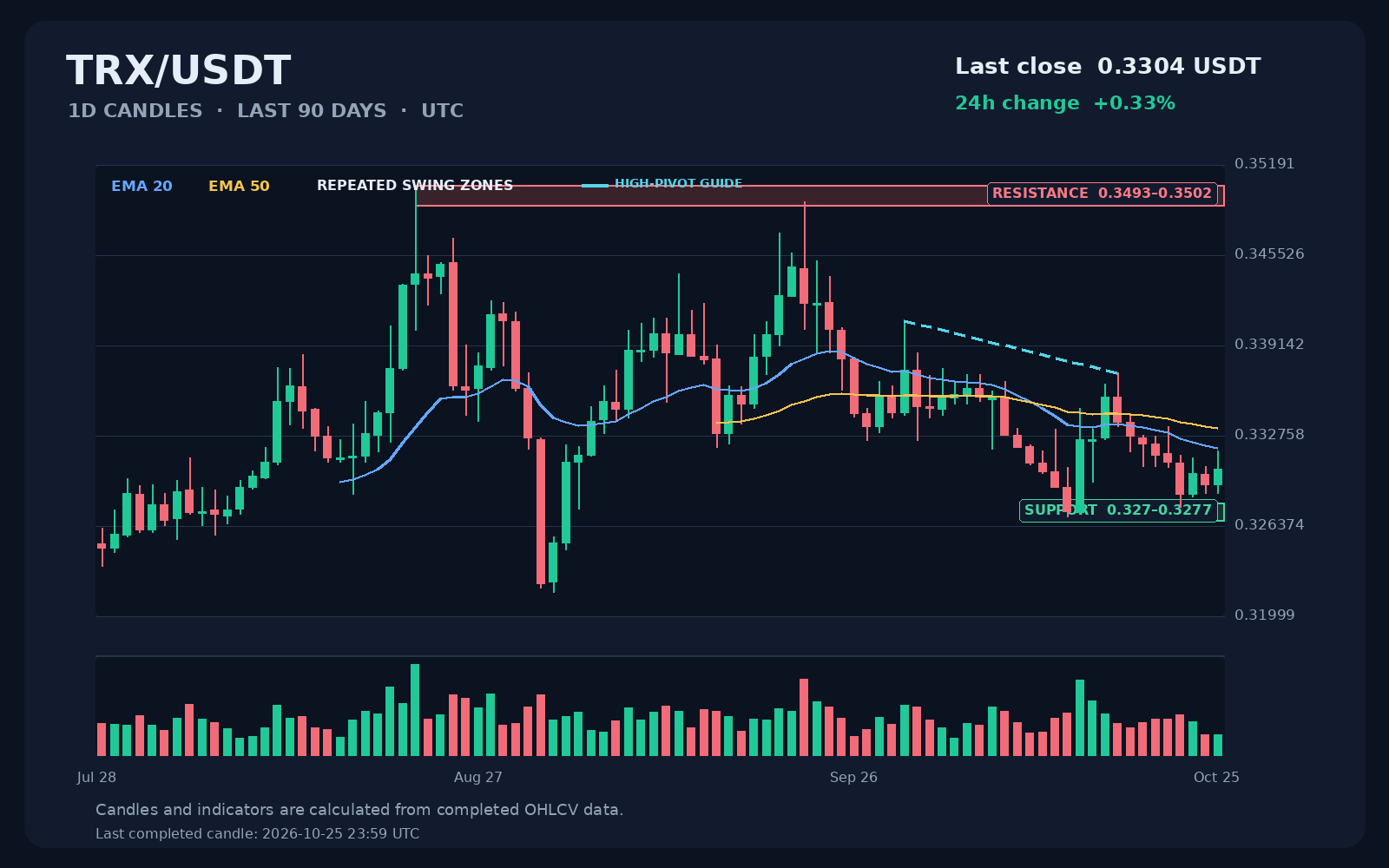
📉 TRX Is Holding Support, But Buyers Still Have Work to Do. TRX closed October 25 at $0.3304, up just 0.33% on the day. A small bounce, but not yet a recovery signal. The bigger picture remains cautious. Price is below both the 20-day EMA at $0.3319 and the 50-day EMA at $0.3333, with the shorter average also below the longer one. TRX has drifted lower after its earlier rebound, forming lower highs along the way. The next key area is support at $0.3270–$0.3277, which has been tested twice. The latest candle stayed above it and closed slightly higher. If that zone holds, TRX could attempt another recovery. A clear break below it would put the lower end of its 90-day range, $0.3217, back in focus. For buyers, reclaiming both moving averages would be an early sign of improving momentum. The repeated resistance zone at $0.3493–$0.3502 remains much further away. TRX also has a role beyond trading: it supports staking, governance and transaction fees on TRON. That ties its utility to network activity, though it doesn't tell us whether demand is rising right now. For now, support is holding. The chart still needs stronger evidence before the trend can turn bullish. #TRX #TRON #Crypto #TechnicalAnalysis
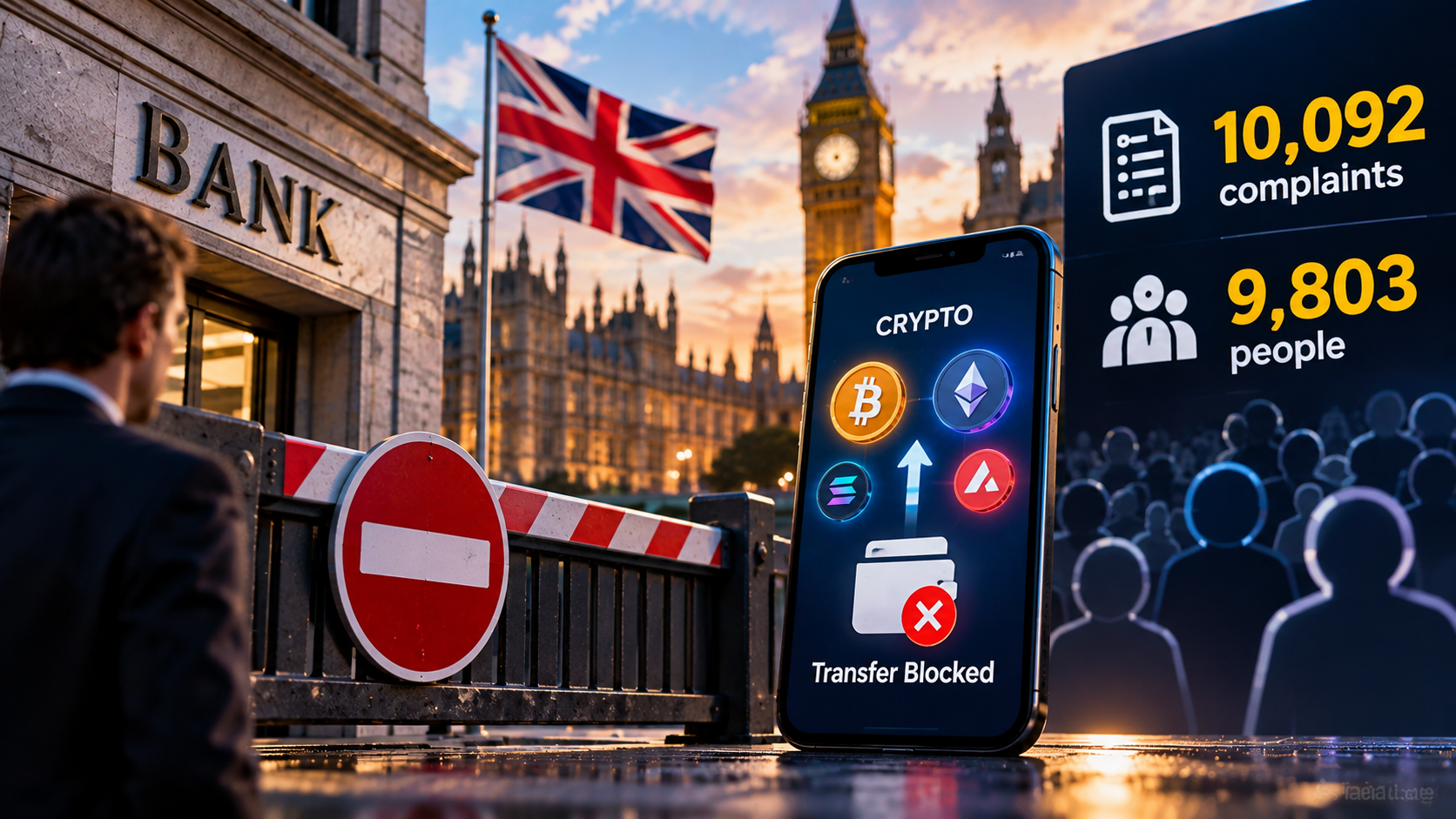
🇬🇧 The UK Wants to Become a Crypto Hub. But Thousands of Users Are Struggling to Move Their Money. Here's the contradiction. The UK wants to attract crypto businesses and investors, yet some customers are having trouble transferring money from their banks to crypto platforms. According to Stand With Crypto UK, 10,092 complaints were submitted by 9,803 people over a 90-day period between May and August 2026. The complaints concerned blocked or restricted transfers to crypto platforms registered with the UK's Financial Conduct Authority (FCA). That's a significant number of people reporting difficulties accessing crypto services. But the figures need context. They come from voluntary submissions through an advocacy group's online tool, not an independent audit of banking transactions. They don't tell us what percentage of transfers were blocked or why each restriction occurred. Still, the underlying issue deserves attention. A crypto platform can be registered with the FCA, yet customers may still encounter banking restrictions when trying to fund their accounts. Banks have responsibilities around fraud prevention and financial crime. Customers, meanwhile, want reliable access to their own money. The real challenge for the UK isn't just attracting crypto companies. It's making sure the financial system can support legitimate access to their services. Because becoming a global crypto hub means little if everyday users struggle to move funds between traditional banking and crypto. #UKCrypto #CryptoRegulation #Banking #Crypto
📉 Avalanche Keeps Building. But AVAX Buyers Are Still Struggling. AVAX closed October 24 at $8.994, down 0.73% for the day. The problem isn't just the latest drop. The moving averages tell a similar story: price remains below both its 20-day EMA ($9.8168) and 50-day EMA ($9.4695). That's a weak position for buyers. And the next important support isn't particularly close. The first repeated support zone sits at $7.011–$7.169, followed by a deeper zone at $6.04–$6.22. Both have been tested three times in the 90-day chart. For recovery, buyers first need to push AVAX back above $9.4695 and $9.8168. Daily closes holding above both would improve the short-term picture. If selling continues, those lower support zones become important areas to watch, not guaranteed floors. Meanwhile, Avalanche's network development hasn't stopped. Its Helicon upgrade went live on September 22, bringing continuous execution to C-Chain, changes to validator staking and a dynamic minimum gas price. These are meaningful infrastructure improvements, but they haven't established a reason for AVAX to rally immediately. The contrast is clear: the network is advancing while the token's chart remains under pressure. Until buyers reclaim those moving averages, the technical picture stays cautious. #Avalanche #AVAX #Crypto #AVAXUSDT

₿ Bitcoin Is Back Near $80K. This Support Zone Could Decide the Next Move. BTC closed October 23 at $81,189, down 0.28% on the day. After climbing from the low-$60K area toward $87K, Bitcoin has lost some momentum. Now buyers face an important test. 📉 The warning sign: BTC is trading below its 20-day EMA at $82,491, suggesting short-term weakness. 📈 The encouraging sign: It remains above its 50-day EMA at $80,447. And just below sits a support zone that has already been tested twice: $79,800–$80,394. That's where things get interesting. If BTC holds this area and reclaims $82,491 on a daily closing basis, buyers would have a stronger case for recovery. But if daily candles start closing below $79,800, the next marked support sits around $76,047–$76,264. Higher up, the $87,220–$87,396 zone remains a major resistance area. Bitcoin's limited supply of 21 million coins hasn't changed. Neither has its post-halving block subsidy of 3.125 BTC. But scarcity alone won't decide the next few trading sessions. Demand will. For now, $80K is the area to watch. A convincing defense could support a rebound. A confirmed breakdown would weaken the short-term picture. #Bitcoin #BTC #Crypto #BTCUSDT

🔐 Bitcoin Core Is Changing Its Security Rules Because AI Is Getting Better at Finding Bugs. Keeping a software vulnerability secret for months makes less sense when someone can potentially rediscover it with a simple AI prompt. Bitcoin Core developers have decided to adapt. Under a policy change merged on October 22, vulnerabilities classified as “easily discoverable” will no longer follow the usual disclosure waiting periods. Instead, developers will aim to release fixes for every maintained major version as quickly as possible, alongside a public security advisory. Why the change? AI tools have made certain software flaws easier to identify. That means keeping details private for months may no longer provide the protection it once did. But there's a tradeoff. Faster releases can reduce the time available to test fixes thoroughly before they reach users. And the new rule doesn't apply to every vulnerability. Other issues still follow disclosure timelines based on severity. This isn't an announcement of a new Bitcoin exploit or a change to Bitcoin's protocol. It's a change in how Bitcoin Core handles security risks. The bigger shift is worth watching: as AI makes some vulnerabilities easier to find, developers may need to move faster to protect the software people rely on. #Bitcoin #BTC #Cybersecurity #AI

🚨 Trump, a $2 Billion Crypto Deal, and a Lawsuit From a Circle Shareholder. A stablecoin rivalry has just entered a federal courtroom. On October 22, J. Benjamin Greenberg, a Circle shareholder, filed a lawsuit against President Donald Trump, World Liberty Financial and others in Washington, D.C. At the center of the case are two major UAE-linked crypto transactions. 💰 $500 million: A reported deal giving a UAE-linked investment vehicle a 49% stake in World Liberty Financial. 💰 $2 billion: Abu Dhabi's MGX investment in Binance, funded using World Liberty's USD1 stablecoin. The lawsuit claims these transactions violated the U.S. Constitution's Foreign Emoluments Clause, which restricts certain benefits federal officials can receive from foreign governments. But there's another accusation. Greenberg argues that the deals gave World Liberty an unfair advantage in the stablecoin market, hurting Circle investors. Think about the competition here. Circle issues USDC, one of the biggest stablecoins in crypto. World Liberty issues USD1, which was used in a multibillion-dollar investment. The lawsuit raises a serious question: Can politically connected crypto businesses gain advantages that ordinary competitors cannot? That's the plaintiff's argument, not an established fact. Circle says it did not initiate, authorize or participate in the lawsuit. World Liberty rejects the allegations as baseless and says it follows U.S. law. Greenberg is seeking the recovery of alleged illegal profits and damages. No court has ruled that the transactions violated the Constitution. What makes this case worth watching isn't just the money. It's the possibility that competition between stablecoin issuers could become a major legal fight over political influence, foreign investment and who gets ahead in crypto. #Crypto #Circle #USDC #USD1 #Stablecoins

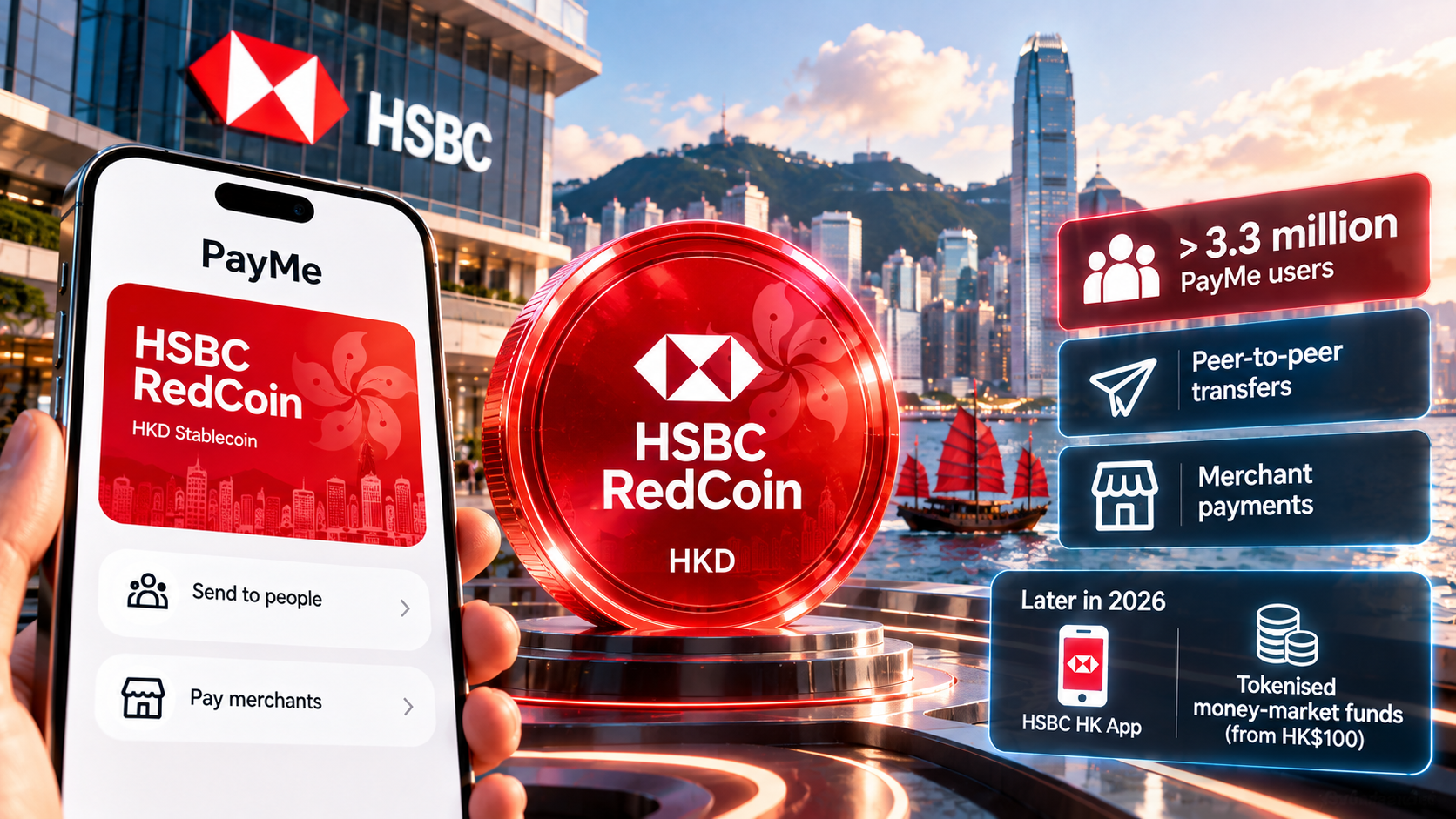
🚨 HSBC Is Bringing Stablecoins to Millions of Everyday Payment Users. Forget crypto exchanges for a moment. What if using a stablecoin felt as simple as sending money to a friend? That's the idea behind HSBC RedCoin, a Hong Kong dollar-backed stablecoin reportedly starting its rollout through PayMe on October 23. And the interesting part isn't just the token. It's where HSBC is putting it. PayMe already has more than 3.3 million users. Instead of asking people to join a crypto platform, HSBC is bringing RedCoin into an app they already know. The first phase focuses on two everyday uses: 💸 Sending money to other users 🛍️ Paying merchants Reports say users can activate a RedCoin wallet without another account or minimum balance. The rollout is gradual, with broader availability expected before the weekend. Those 3.3 million users represent PayMe's potential reach, not confirmed RedCoin adoption. HSBC says RedCoin is designed to be fully backed by segregated, high-quality liquid assets and redeemable 1:1 for Hong Kong dollars. HSBC received its Hong Kong stablecoin issuer licence in April. But payments may only be the beginning. By year-end, HSBC plans to bring RedCoin into its Hong Kong mobile banking app. The first planned investment feature? Access to tokenized HKD money-market funds starting from HK$100. Tokenized gold and third-party funds could follow later. Those investment features aren't part of today's rollout. Here's why this matters. Stablecoins have spent years trying to reach ordinary users. HSBC is taking a different route: putting one inside an established banking and payment ecosystem. Whether people actually use it at scale remains to be seen. But the bigger shift is clear: stablecoins are moving beyond crypto trading and into everyday financial services. #Stablecoins #HSBC #HongKong #Tokenization
🚀 Solana Just Made One of Its Biggest Upgrades. And the Numbers Are Wild. Imagine a blockchain going from nearly 13 seconds to a target of just 150 milliseconds for transaction finality. That's the ambition behind Alpenglow, Solana's major consensus upgrade. And this time, it's not just a proposal. On October 21, Solana activated Alpenglow's Votor component on mainnet. Here's why that's a big deal. Previously, Solana relied on TowerBFT, with transaction finality taking around 12.8 seconds. Votor changes how validators agree on transactions. Instead of sending voting transactions onto the blockchain, validators vote directly and combine their approvals into certificates. The goal? Finality in roughly 150 milliseconds. That's about 85 times faster than the previous 12.8-second figure. But there's an important distinction: 150 ms is the protocol's target, not yet a verified measurement of live network performance. What could this change for users? If the target holds under real conditions, faster finality could make payments, trading and applications that need quick confirmation feel much more responsive. And users don't need to do anything. Existing wallets and apps continue working. Transaction execution and fees remain unchanged. There's also a detail worth knowing if you follow Solana's activity numbers. Validator votes no longer appear as on-chain transactions. So total transaction counts could fall even if real user activity stays the same. Is Alpenglow fully finished? Not yet. Votor is live, but Rotor, the planned upgrade to how blocks spread across the network, is still coming later. Solana has taken a major step toward faster finality. Now comes the real test: how closely live performance matches that ambitious 150 ms target. #Solana #SOL #Blockchain

🚨 Bitcoin ETFs Just Pulled In Over $1 Billion. But Look at the Middle Day. U.S. spot Bitcoin ETFs attracted $1.075 billion in net inflows across three trading sessions. Sounds like investors are rushing back, right? Well, the daily numbers tell a more interesting story. 📅 October 19: +$526.7 million 📅 October 20: +$23.2 million 📅 October 21: +$524.8 million That's two huge days with a surprisingly quiet one in between. The three-day average? About $358 million per session. And here's where things get interesting. CoinDesk compared current ETF demand with roughly $235 million in daily inflows, a pace it associated with past sharp Bitcoin rallies. But the latest verified numbers tell a different story: the three-day average is already above that figure, and two individual sessions exceeded it. That doesn't mean Bitcoin is guaranteed to rally. It means the argument that ETF demand hasn't reached that benchmark doesn't fit these three sessions. There's also a catch: the historical period and calculation behind CoinDesk's comparison aren't independently established here. So what should investors actually watch? Consistency. One massive inflow day can grab headlines. Two strong days are encouraging. But sustained demand across more sessions would be a stronger signal than a three-day snapshot. ETF inflows show money entering the funds. They don't prove what's driving Bitcoin's price or what happens next. For now, the takeaway is simple: The money is flowing. The real question is whether it keeps flowing. #Bitcoin #BTC #BitcoinETF

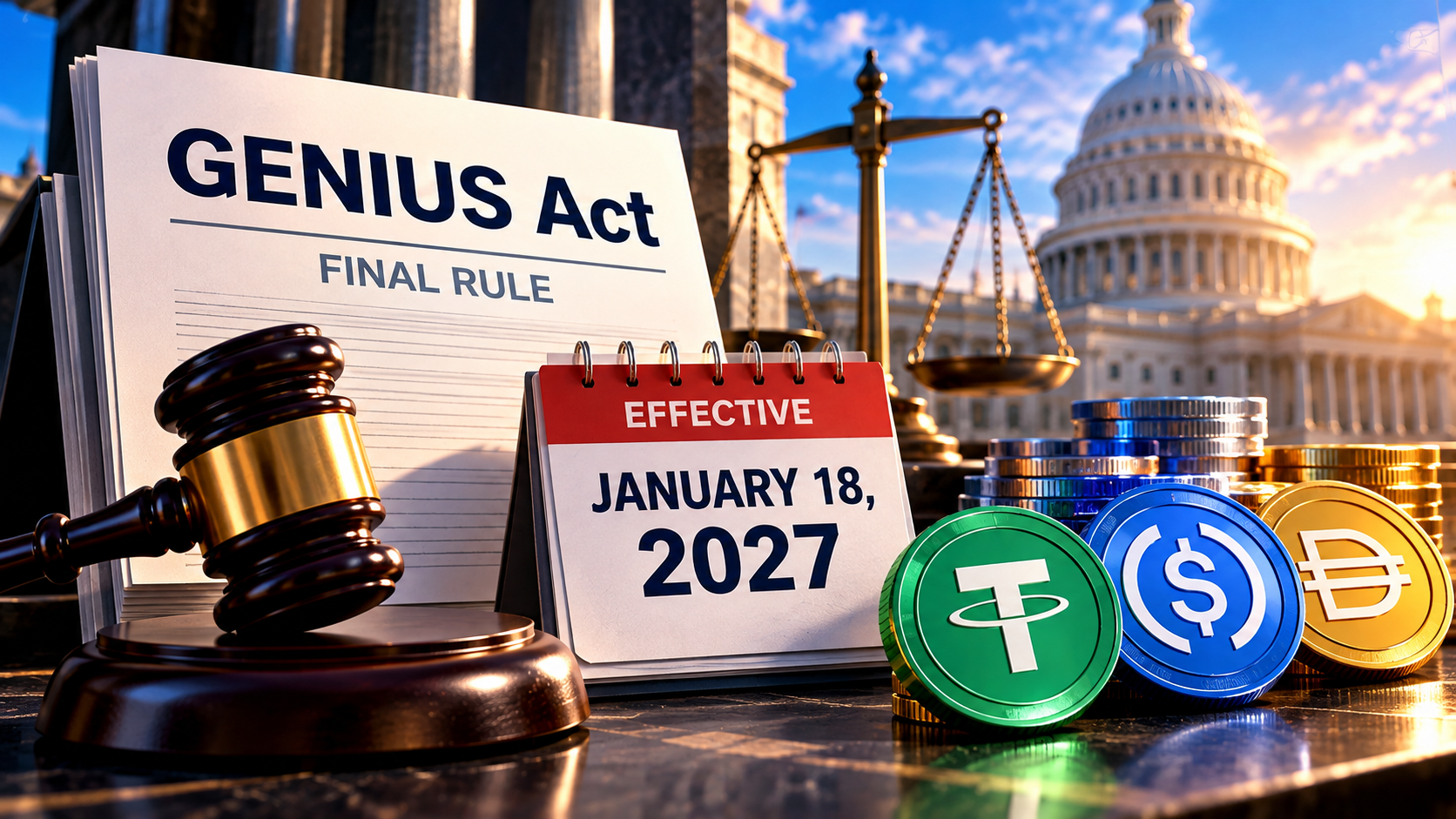
🚨 Stablecoin Rewards Just Got a Reality Check in the US. If you earn rewards on stablecoins, this change deserves your attention. On October 21, the US Office of the Comptroller of the Currency (OCC) finalized its first rule implementing the GENIUS Act. It takes effect on January 18, 2027. And there's one detail existing rewards programs can't ignore: Being around before the law doesn't give you a free pass. The OCC confirmed that older programs won't receive automatic protection. They'll be assessed under the same standards as newer ones. But here's where things get interesting. Does this mean stablecoin rewards are banned? Not exactly. The law prohibits payment stablecoin issuers from paying interest or yield solely because someone holds, uses or retains their stablecoins. That doesn't automatically make every third-party rewards program illegal. The OCC removed a proposed presumption that could have treated certain issuer partnerships with third parties as violations. But it didn't give those partnerships blanket approval either. Regulators will examine how each arrangement works, including whether it's designed to get around the rules. Genuine payments for services may still be allowed, depending on the circumstances. Why does this matter? Stablecoin rewards have become a way platforms attract users. Now, programs within the OCC's jurisdiction face clearer rules, but not necessarily easier answers. For companies offering rewards, the key question isn't simply who pays. It's what the payment is really for. And for users, there's an important distinction: a rewards program existing today doesn't guarantee it can continue unchanged. The OCC hasn't determined the fate of individual programs at Coinbase, PayPal or Kraken. The rule is final. How specific rewards models fit within it remains a question. #Stablecoins #GENIUSAct #CryptoRegulation
🚨 Grayscale Just Made a Big Crypto Move. But There's a Catch. Imagine holding Bitcoin or Solana and wanting to move that exposure into a traditional investment portfolio. Normally, you'd sell your crypto first, then invest the cash. Grayscale offers another route. On October 21, the company announced In-Kind Investing across 10 digital asset products. Eligible investors can contribute supported crypto directly in exchange for product shares, without first converting it into cash. And this isn't just about Bitcoin. The lineup covers BTC, ETH, SOL, AVAX, LINK, DOGE, HYPE, SUI, XRP and ZEC. That's a bridge between crypto holdings and traditional investment products. Here's where it gets interesting. Grayscale says this approach may reduce the hassle of managing crypto directly and make it easier to integrate digital asset exposure into traditional portfolios. But don't mistake this for a simple token swap. Access requires eligible investors to work through an Authorized Participant or another intermediary. And the minimums are substantial. As of October 20, approximate minimum investments ranged from $80,300 for GSOL to $364,800 for BTC, depending on the product. Those amounts can change. There's another important detail: owning Grayscale shares isn't the same as directly owning the crypto. Shares may trade above or below their underlying asset value. Fees, execution risks and uncertain tax treatment remain. So why does this matter? Grayscale didn't invent a new way to trade crypto. But investors now have a direct contribution route across ten products, including assets beyond BTC and ETH. That could make crypto-to-portfolio transfers more practical for some eligible investors. Whether it attracts meaningful demand is still unknown. For now, this is a new access route, not proof of a new wave of institutional buying. #Grayscale #Crypto #Bitcoin

🐕 DOGE/USDT Is Bouncing, but the Bulls Still Have Work to Do! Dogecoin is showing signs of life. The question is whether buyers can turn a short-term bounce into something stronger. 📊 DOGE/USDT — October 21, 2026 At 13:30 UTC, DOGE was trading at 0.08226 USDT. That's a live snapshot, not the daily closing price. The last completed daily candle closed at 0.08187 USDT, up 2.6583%. A green candle is encouraging, but the technical picture remains cautious. 📉 Two moving averages stand in the way 🔹 20-day EMA: 0.084759 USDT 🔹 50-day EMA: 0.085198 USDT DOGE closed below both, with the shorter EMA slightly beneath the longer one. That suggests buyers haven't yet regained control of the broader short-term trend. 🔍 Where could the next reaction happen? The closest historical support zone is 0.08013–0.08108 USDT, identified by two previous price reactions. A lower support zone sits at 0.06766–0.06904 USDT, with four historical reactions. These levels are areas to watch, not guaranteed floors. The chart also shows falling swing highs and lows, suggesting the recent bounce hasn't yet broken the declining structure. A sustained move above both EMAs could strengthen the recovery case. Losing nearby support, however, could expose DOGE to further weakness. Neither outcome is confirmed. 🐕 What about Dogecoin's fundamentals? Dogecoin remains a community-driven cryptocurrency built around Scrypt proof-of-work technology. Its Shiba Inu identity is famous, but memes alone don't explain market momentum. No fresh official protocol release or development catalyst was identified to explain this bounce. 💡 The takeaway DOGE has recovered some ground, but the daily chart still needs stronger confirmation. For now, the bulls have a bounce. They don't yet have a confirmed reversal. #DOGE #Dogecoin

🚨 Ripple Challenges a Big Crypto Question: When Does a Token Stop Being a Security? Imagine a company selling tokens while promising to build something valuable. Investors may be relying on those promises. But what happens when the company finishes the work? Should securities regulation continue forever? Ripple says no. ⚖️ What's happening? On October 20, Ripple submitted a comment letter supporting the core approach of the SEC's proposed Regulation Crypto Assets. Its central argument is simple: the investment contract is the security, not necessarily the token itself. Ripple argues that SEC oversight tied to an issuer's promises should end when the promised managerial efforts have been fulfilled or cease. In other words, a token shouldn't automatically remain subject to securities regulation just because it was originally sold through an investment contract. 🏛️ What is the SEC proposing? The proposal would introduce tailored rules for certain crypto-related investment contract offerings. It also includes a conditional safe harbor addressing when an associated investment contract may come to an end. But here's the important distinction: This is still a proposal, not an adopted regulation. And Ripple's letter is a public comment, not an SEC ruling on XRP. 💡 Why does this matter? The debate goes beyond Ripple. It touches a fundamental issue for crypto projects: how long should securities obligations linked to an issuer's promises continue? Clearer boundaries could influence token distributions, fundraising structures and regulatory compliance across the industry. But the SEC could revise the proposal or decide not to adopt it. Ripple has made its position clear. Whether regulators agree remains an open question.

🚨 Utah Takes Kalshi to Court: Is It Trading or Gambling? Prediction markets let people trade on real-world outcomes. But when those outcomes involve sports, where does trading end and gambling begin? Utah wants that question answered in court. On October 20, Attorney General Derek Brown filed a civil lawsuit against Kalshi and affiliates, accusing them of violating the state's gambling laws. ⚖️ What does Utah want? The state is seeking a court order to stop Kalshi from accepting wagers from Utah residents, along with damages and restitution. According to the complaint, Utah accounts placed more than $3 billion in wagers. Based on its fee assumptions, the state estimates Kalshi-associated fees from those accounts at $30.6 million to $61.2 million as of October 19. Those figures are allegations and estimates, not court-confirmed damages. 🏛️ Kalshi isn't backing down Kalshi argues that it operates as a federally regulated exchange and says the new lawsuit doesn't affect its ongoing federal litigation. In a separate case earlier this year, Kalshi challenged Utah's ability to enforce its gambling restrictions against the platform. An August federal ruling rejected Kalshi's argument that federal commodities law overrides Utah's enforcement authority. Kalshi appealed. The October 20 lawsuit is a separate state-court action, with no final ruling yet. 🔍 Why should crypto traders care? Prediction markets are increasingly part of the broader digital-asset conversation. This dispute highlights a regulatory question: can federal oversight of an exchange prevent states from applying their own gambling laws? The answer could shape how prediction-market platforms operate across different U.S. jurisdictions. For now, Utah is seeking restrictions, not celebrating a shutdown. The next major development will come from the courts.