Kashi Khan tumsa
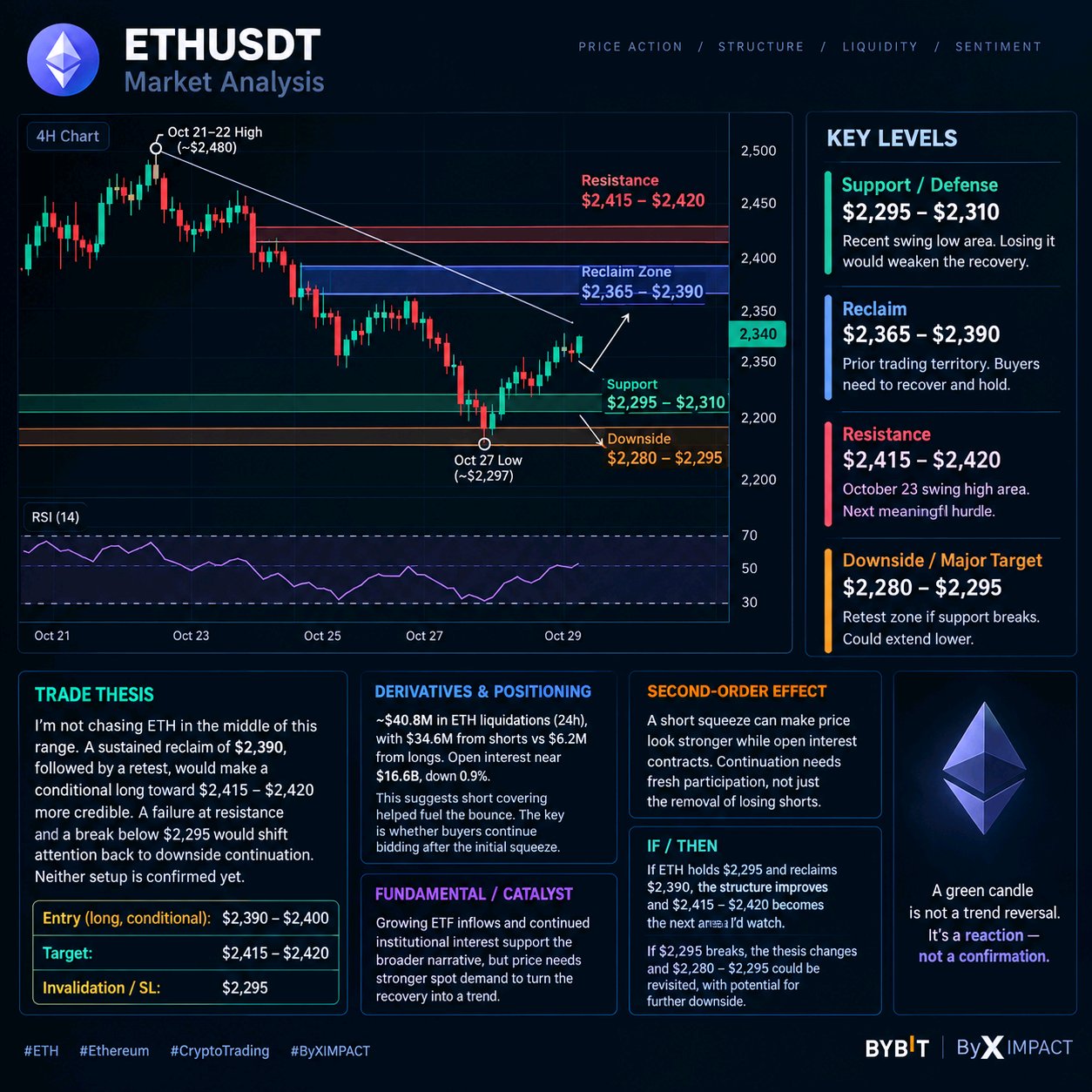
$ETHUSDT is recovering from the October sell-off, but a green daily candle does not automatically mean the trend has reversed. ETH is trading around $2,340, recovering from the October 27 low near $2,297. The bigger problem for buyers is the supply overhead: price still needs to reclaim the $2,365–$2,390 region before the recovery starts looking structurally convincing. On the 15M/1H chart, the immediate battle is whether buyers can defend the recent rebound and establish higher lows. On the 4H/Daily structure, the decline from the October 21–22 area near $2,480 remains important. Until ETH recovers lost ground, this is a rebound inside a damaged short-term structure, not a confirmed trend reversal. The derivatives data adds an interesting twist. Approximately $40.8M in ETH positions were liquidated over 24 hours, with $34.6M coming from shorts versus $6.2M from longs. Open interest stood near $16.6B, down 0.9%. That combination suggests short covering has contributed to the move. The key distinction: forced short closures can accelerate a rally without necessarily creating sustained spot demand. The next test is whether buyers continue bidding after that initial squeeze. Key levels I’m watching: - Support: $2,295–$2,310 — the recent swing-low area; losing it would weaken the recovery. - Reclaim: $2,365–$2,390 — prior trading territory that buyers need to recover and hold. - Resistance: $2,415–$2,420 — the October 23 swing-high area and the next meaningful hurdle. - Downside: $2,280–$2,295 — a retest zone if support breaks, with renewed selling potentially extending lower. Trade thesis: I would avoid chasing ETH around the middle of this range. A sustained reclaim of $2,390, followed by a successful retest, would make a conditional long toward $2,415–$2,420 more credible. A failure at resistance followed by a break below $2,295 would shift attention back to downside continuation. Neither setup is confirmed yet. The overlooked detail is that a short squeeze can make price look stronger while open interest contracts. Continuation needs fresh participation, not just the removal of losing shorts. Would you trust a $2,390 breakout without open interest expanding, or wait for evidence that new buyers are actually entering? #MyByXTake
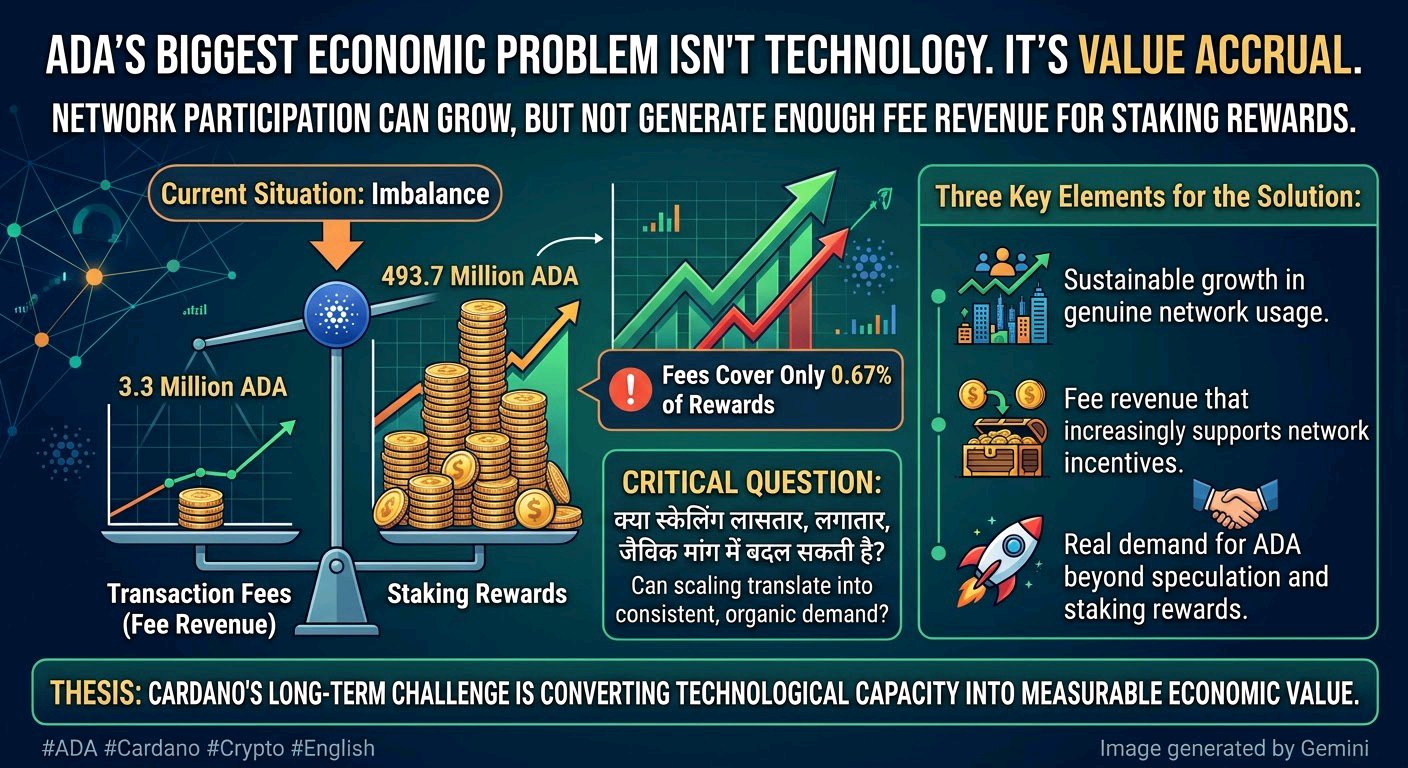
$ADAUSDT Biggest Economic Problem Isn’t Technology. It’s Value Accrual. Cardano has a clear economic contradiction: network participation can grow without generating enough fee revenue to support its reward economy. A September 2026 analysis reported 3.3 million ADA in transaction fees against 493.7 million ADA in staking rewards across 73 epochs. Fees covered just 0.67% of rewards. That gap raises a serious question about long-term sustainability. <Cite refs={["turn500931search1"]}/> The issue isn’t whether Cardano can scale. It’s whether scaling can translate into consistent, organic demand for blockspace. More transactions alone don’t guarantee stronger value for ADA. Activity driven by incentives, automated behavior, or temporary campaigns can inflate metrics without creating durable economic demand. For ADA to build a stronger fundamental case, three things matter: • Sustainable growth in genuine network usage. • Fee revenue that increasingly supports network incentives. • Real demand for ADA beyond speculation and staking rewards. My thesis: Cardano’s long-term challenge is converting technological capacity into measurable economic value. Until fee generation catches up with the reward structure, adoption metrics tell only half the story. The real question isn’t how many transactions Cardano can process. It’s how much sustainable economic demand those transactions create. #MyByXTake
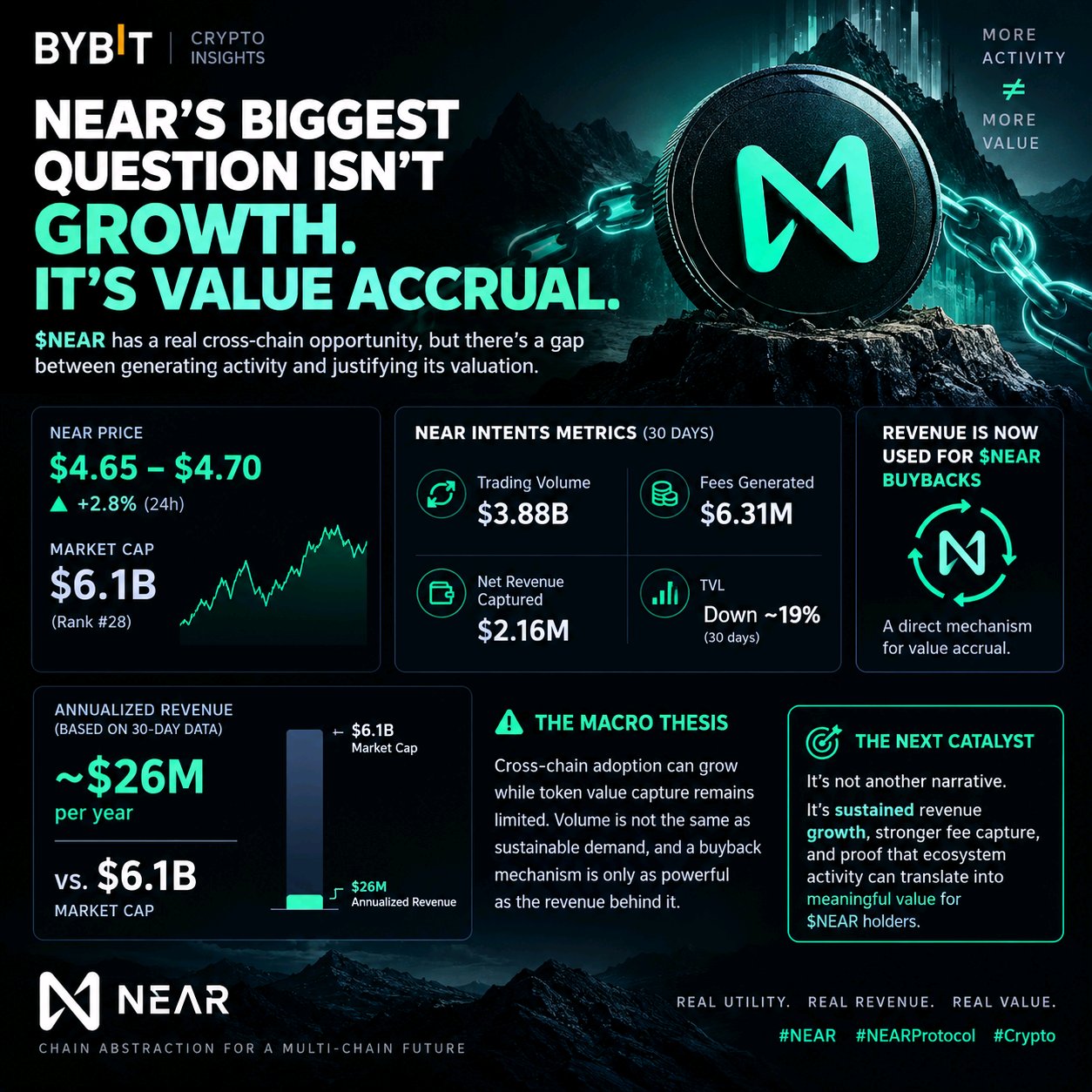
NEAR’S BIGGEST QUESTION ISN’T GROWTH. IT’S VALUE ACCRUAL. $NEARUSDT has a real cross-chain opportunity, but there’s a gap between generating activity and justifying its valuation. As of October 28, NEAR trades around $4.65–$4.70, with a market cap near $6.1 billion. The latest NEAR Intents metrics reveal the contradiction: • 30-day trading volume: $3.88 billion • Fees generated: $6.31 million • Net revenue captured: $2.16 million • TVL: Down approximately 19% over 30 days That is billions in activity, but only a small fraction converts into captured revenue. NEAR Intents revenue is now being used for $NEAR buybacks, creating a direct mechanism for value accrual. But the numbers still need to scale. Annualizing the latest 30-day revenue gives roughly $26 million. Against a $6.1 billion market cap, that is a demanding valuation to justify through current revenue alone. The macro thesis is simple: Cross-chain adoption can grow while token value capture remains limited. Volume is not the same as sustainable demand, and a buyback mechanism is only as powerful as the revenue behind it. The next catalyst is not another narrative. It is sustained revenue growth, stronger fee capture, and proof that ecosystem activity can translate into meaningful value for $NEAR holders. #MyByXTake
$CHIPUSDT : AI Credit Is Growing, But Who Captures the Value? The biggest contradiction in USD.AI is simple: the protocol can generate real revenue from AI infrastructure financing, yet CHIP holders have no automatic claim on that revenue. USD.AI operates in a powerful macroeconomic narrative. AI compute requires massive capital, GPU-backed lending helps finance that demand, and the protocol is building exposure to this expanding credit market. But economic growth and token value are two different things. As of October 27, USD.AI had approximately $266M in TVL, $310M in active loans, and $4.59M in fees over the past 30 days. Yet only about $459K was reported as protocol revenue over that period, while the token-holder net-income line remained at zero. CHIP does not represent equity or ownership of protocol assets. That is the valuation problem. Investors can price CHIP around the future of AI infrastructure, but the token's governance utility alone does not guarantee that growing revenue will translate into value for holders. Staking also introduces a backstop role against protocol shortfalls. The real question is not whether AI financing expands. It is whether CHIP develops a credible, durable mechanism to capture value from that expansion. Revenue growth is a business metric. Value accrual is a token thesis. They are not the same thing. #MyByXTake #WSOT2026 #AnthropicS1Filing

$XAUTUSDT TOKENIZED GOLD DOESN’T CREATE NEW ECONOMIC VALUE. Everyone talks about bringing gold on-chain. Few ask the question that actually matters: Does tokenization create value—or simply change how gold is owned and traded? XAUT represents ownership of physical gold, with each token linked to one fine troy ounce. But blockchain technology does not transform gold into a yield-generating asset. ⚠️ Here’s the structural contradiction: XAUT offers digital accessibility, but holders still depend primarily on gold’s price appreciation. The token itself does not generate native income or automatically capture value from on-chain activity. And the risks remain: issuer and custody exposure, redemption friction, and possible premiums or discounts against physical gold. 📊 XAUT Market Snapshot — October 27, 2026 💰 Price: ~$4,006.59 🟢 24H Change: +0.32% 📉 7D Change: −3.15% 📉 30D Change: −6.31% 📊 24H Trading Volume: ~$165.4M 🔺 24H High: $4,025.01 🔻 24H Low: $3,980.02 The macro thesis: XAUT is a digital vehicle for gold exposure, not a yield engine. If gold rises amid monetary uncertainty, XAUT may benefit. But token adoption alone does not guarantee additional economic value—and a weaker gold market can still drag the token lower. The real metric to watch isn’t just adoption. It’s gold performance, liquidity, and confidence in the underlying backing. #MyByXTake

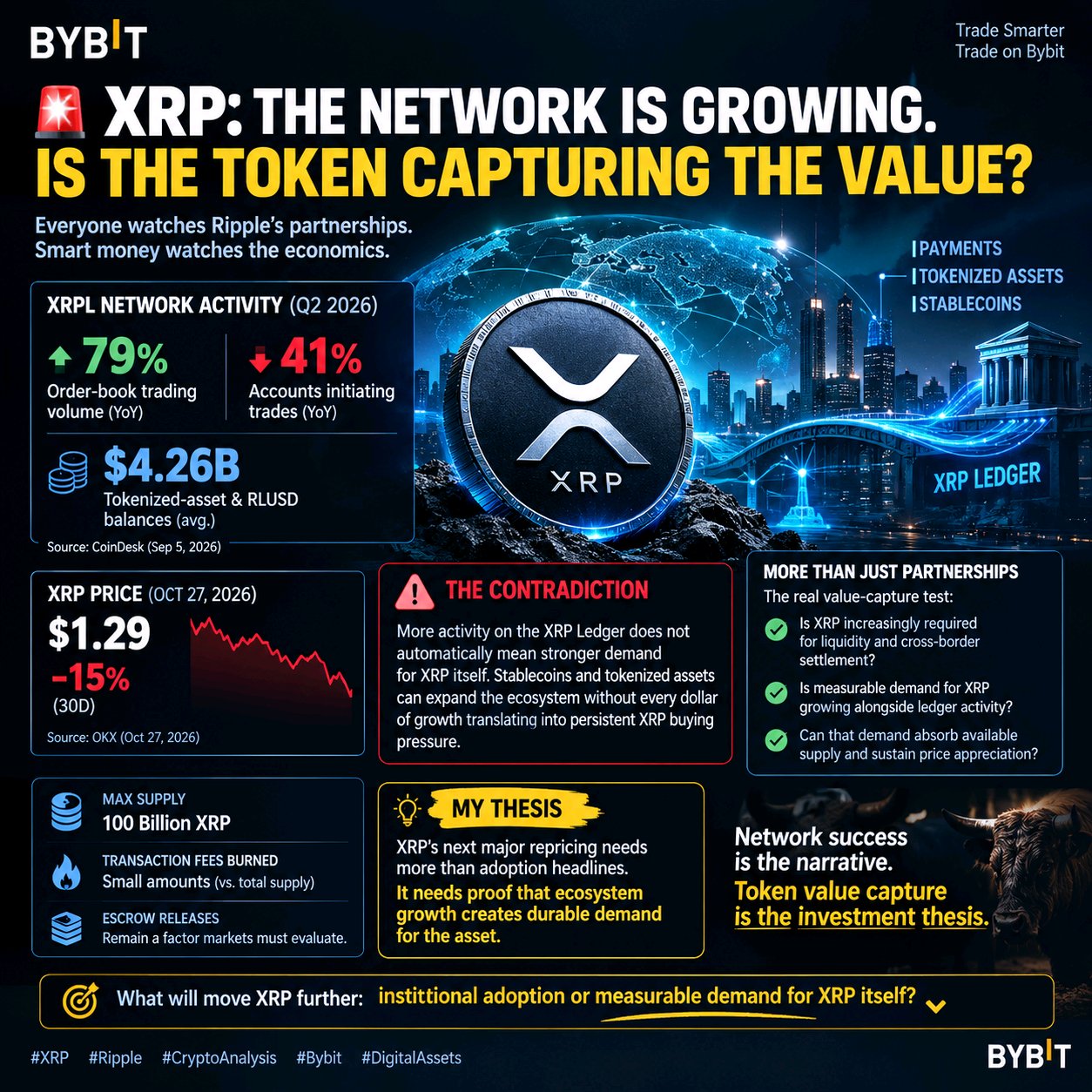
🚨 $XRPUSDT THE NETWORK IS GROWING. IS THE TOKEN CAPTURING THE VALUE? Everyone watches Ripple’s partnerships. Smart money watches the economics. Here’s the contradiction: 📊 XRPL order-book trading volume rose 79% year over year in Q2 2026, while the number of accounts initiating trades fell roughly 41%. Meanwhile, tokenized-asset and RLUSD balances averaged around $4.26 billion. Yet XRP was trading near $1.29 on October 27, down approximately 15% over 30 days. That’s the disconnect the market needs to solve. More activity on the XRP Ledger does not automatically mean stronger demand for XRP itself. Stablecoins and tokenized assets can expand the ecosystem without every dollar of growth translating into persistent XRP buying pressure. ⚠️ The real value-capture test: • Is XRP increasingly required for liquidity and cross-border settlement? • Is measurable demand for XRP growing alongside ledger activity? • Can that demand absorb available supply and sustain price appreciation? XRP has a hard supply cap of 100 billion, while transaction fees burn only small amounts of XRP. Scarcity alone is not a catalyst. 🔥 My thesis: XRP’s next major repricing needs more than adoption headlines. It needs proof that ecosystem growth creates durable demand for the asset. Network success is the narrative. Token value capture is the investment thesis. What will move XRP further: institutional adoption or measurable demand for XRP itself? 👇 #MyByXTake
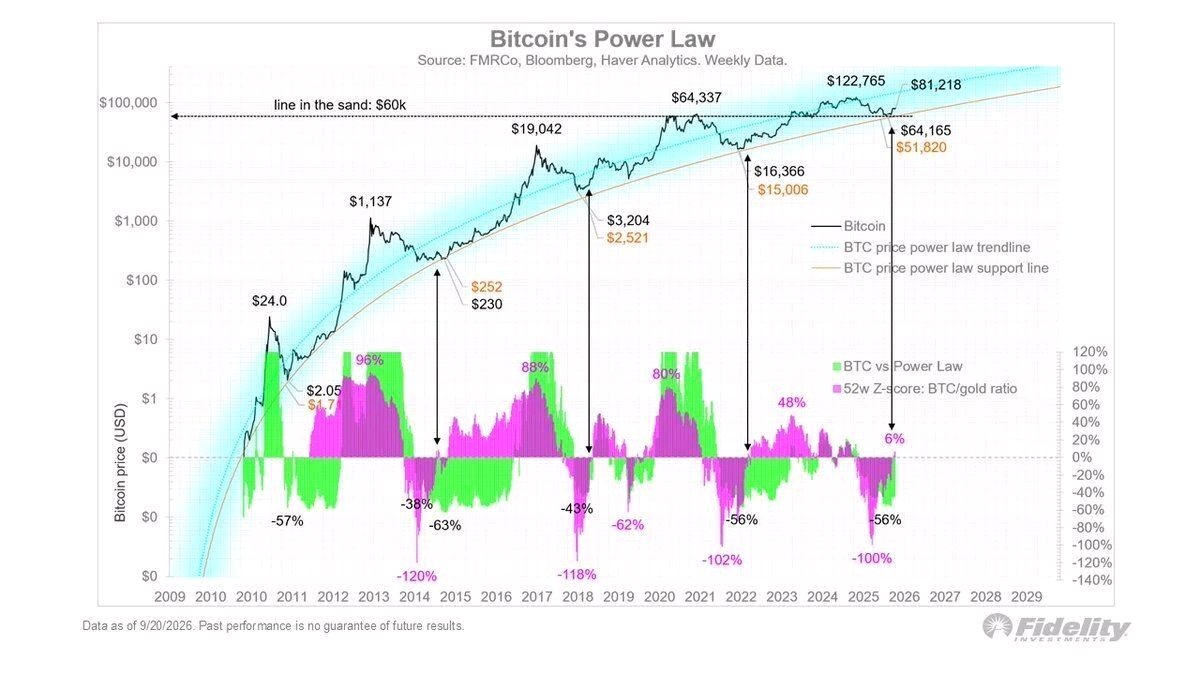
.🚨 BITCOIN’S BIGGEST CONTRADICTION: SCARCITY DOESN’T GUARANTEE DEMAND $BTCUSDT is trading around $80,300, roughly 36% below its reported all-time high of $126,198. The market is exposing a hard truth: limited supply alone cannot sustain a valuation when marginal demand weakens. Here’s the macro disconnect. 📉 Price: ~$80.3K 📊 Market Cap: ~$1.6T 💰 24H Trading Volume: ~$18.4B 🏦 U.S. Spot BTC ETFs: $635.6M net outflow on October 22 📈 U.S. 10Y Treasury Yield: Near 5% Bitcoin is marketed as digital gold, but when Treasury yields approach 5%, capital has a meaningful alternative to a non-yielding asset. The contradiction is simple: Bitcoin’s supply is structurally scarce, but investor demand remains liquidity-sensitive. That distinction matters more than another bullish headline. Watch the $79K–$80K area for signs of support and the $81K–$84K zone for a potential recovery attempt. These are observation zones, not confirmed breakouts. If institutional inflows return and price reclaims resistance, the bullish thesis strengthens. If demand remains weak, scarcity alone will not prevent another repricing. The real question isn’t how scarce BTC is. It’s how much capital is willing to pay for that scarcity. #MyByXTake

$SUIUSDT s Biggest Contradiction: High Throughput, Weak Value Capture. As of October 26, 2026, Sui recorded 37.29M transactions in 24 hours and 119,528 active addresses. Yet chain fees were just $2,110, while reported chain revenue stood at $15.78. The broader picture is equally important: • DeFi TVL: $471.07M • 7-day DEX volume: $155.59M, down 40.52% • Stablecoin market cap: $431.9M, down 14.05% over 7 days • 24-hour net flows: -$19.81M Meanwhile, $SUI trades around $0.92, with a market cap near $3.77B and fully diluted valuation around $9.17B. Only 41.18% of its 10B maximum supply is circulating. That is the economic problem: network activity does not automatically translate into tokenholder value. Millions of transactions mean little to valuation if sustained demand fails to produce stronger fee capture, deeper liquidity, and durable capital inflows. The bull case needs more than throughput statistics. It needs evidence that economic activity can grow faster than dilution pressure. Until then, SUI’s technology story may be stronger than its value-accrual story. What matters more: transaction count or actual economic capture? #MyByXTake

🤣 Me avoiding bro after he lost all his money on my call. Bro: “You said it was guaranteed!” Me: “I never said that… must’ve been another account. 💀” 😂 #ByXIMPACT #USNonfarmPayrolls
$ENAUSDT Ethena Is Growing. But Is ENA Actually Capturing That Growth? Ethena is now sitting near $5.4B TVL, with USDe around $4.9B and more than $1B in cumulative protocol fees. On paper, the fundamentals look strong. But there is one major contradiction: Protocol growth is happening faster than token value capture. ENA is trading around $0.25, with roughly $3.4B market cap, while the biggest catalyst for holders is still conditional. Ethena’s proposed fee-switch model could direct 95% of net protocol revenue toward ENA buybacks once USDe reaches the $7.5B supply milestone. USDe is still roughly $2.6B short of that target. At the same time, supply pressure cannot be ignored. Around 171.9M ENA was recently unlocked, creating another test for demand absorption. So the real question isn’t whether Ethena can grow. It’s whether USDe growth can become sustainable ENA demand before new supply overwhelms the market. $7.5B USDe → fee switch → buybacks → stronger value capture. Until that chain is activated, Ethena’s growth and ENA’s value are not automatically the same thing. Watch the supply, watch USDe, and watch the buyback trigger. #ByXIMPACT

ByPick is not just another engagement feature. The bigger thesis is turning user opinions into measurable participation. Bybit launched ByPick Season 1 on September 28, allowing users to make free predictions across crypto, sports, and financial events using Campaign Points instead of real money. The season runs through October 31, with a 100,000 USDT prize pool. The interesting part is the value loop: predict → earn CP → climb the leaderboard → compete for rewards. Correct picks generate more CP, while check-ins, trading tasks, milestones and referrals create additional earning paths. That creates a stronger community flywheel for ByX: users are not only consuming content—they are participating, predicting and returning daily. And that is exactly why I’m excited to welcome @ByPick MakeYourPickCount to the ByX community. Make your pick. Build your streak. Make your opinion count. 🧡

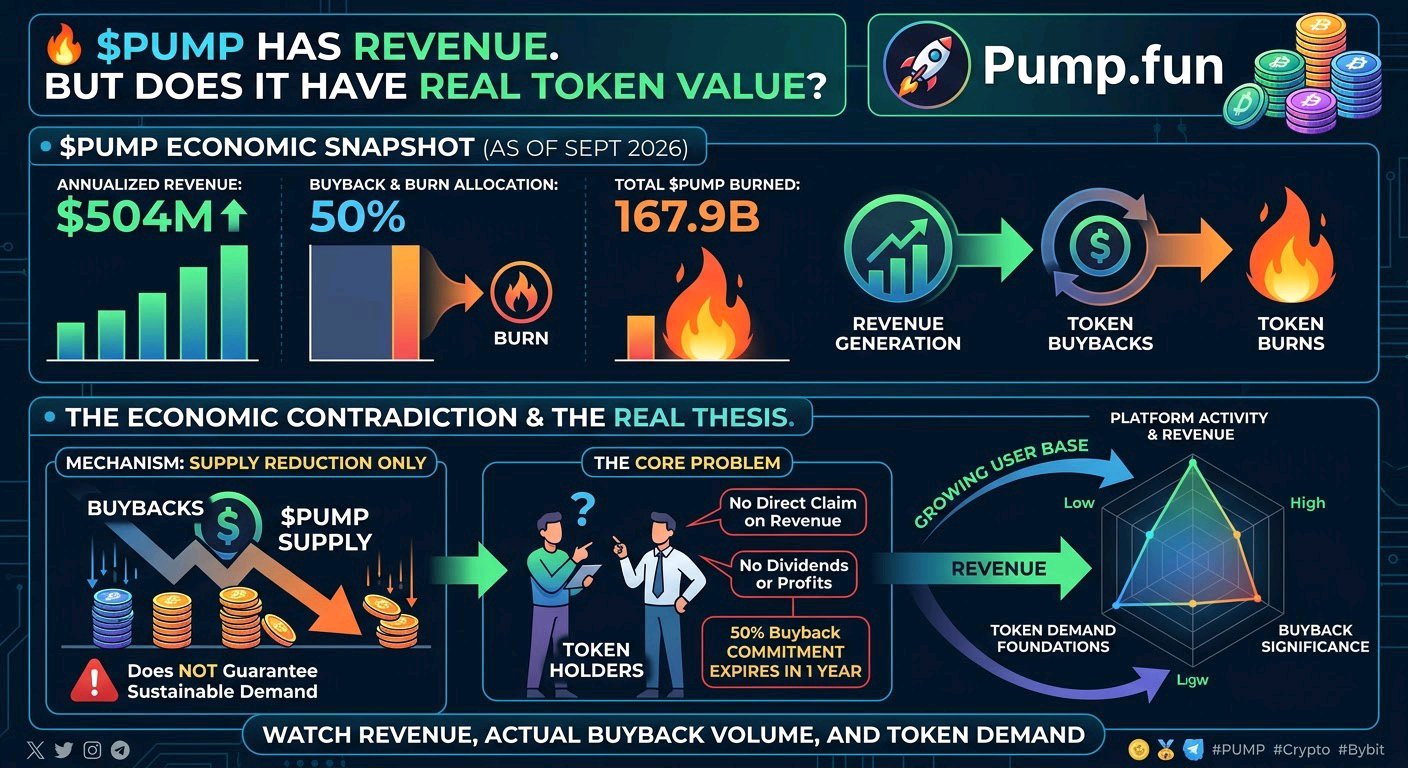
$PUMPUSDT HAS REVENUE. BUT DOES IT HAVE REAL TOKEN VALUE? Pump.fun has built a powerful revenue engine, but $PUMP faces one major economic contradiction: the platform generates cash, yet the token still depends heavily on buybacks to capture value. As of September 2026, Pump.fun reports approximately $504M in annualized revenue, with 50% allocated to buybacks and burns. Around 167.9B $PUMP tokens have already been burned. But here's the bigger picture. Buybacks reduce supply; they don't guarantee sustainable demand. $PUMP holders have no direct claim on protocol revenue, dividends, or profits. Even more importantly, the current 50% buyback commitment is programmed for only one year, making its continuation a key variable for long-term valuation. The real question isn't how much $PUMP gets burned. It's whether Pump.fun can turn its revenue into lasting demand for the token. If platform activity keeps growing, buybacks could remain significant. If revenue weakens or the program expires, the market will need another reason to hold $PUMP. Watch revenue, actual buyback volume, and token demand. That's where the real thesis lies. #ByXIMPACT #BybitAIBestReplies #PolyMarketPreIPO #ByPickMakeYourPickCount #BybitOdds
$SNXUSDT The Real Test Is Revenue, Not Hype. Synthetix is rebuilding its position in DeFi, shifting its focus toward Ethereum-based perpetual trading. But the biggest contradiction remains: a strong trading platform does not automatically create value for its token. The 2026 strategy directs trading revenue toward SNX and sUSD buybacks, creating a potential link between platform activity and token demand. However, buybacks are only meaningful if trading volume and fee revenue grow consistently. Without sustained demand, token buybacks alone cannot guarantee long-term value. The key catalysts are expanding perpetual markets, multi-collateral trading, deeper liquidity, and a stable sUSD peg. The critical metric is real revenue. If trading activity scales and buybacks become substantial, SNX's value-accrual model could strengthen. If volume remains weak, the buyback narrative faces a serious test. Watch actual fee generation, buyback execution, and sustained trading volumenot just announcements. #ByXIMPACT

$PENGUUSDT A Powerful Brand, But Where Is the Token Value? Pudgy Penguins has expanded beyond NFTs into physical toys, retail distribution, and mainstream branding. But $PENGU faces one critical contradiction: the brand can grow without the token necessarily capturing that growth. With a fixed maximum supply of 88.89 billion tokens, PENGU has a defined supply structure. However, team and company allocations represent 29.28% of the original supply, creating ongoing unlock pressure. The real question isn't whether Pudgy Penguins can attract millions of users. It's whether that attention translates into sustainable demand for $PENGU. Brand expansion, merchandise sales, and ecosystem adoption can strengthen the business, but without direct revenue sharing or meaningful token sinks, value accrual remains uncertain. The bullish thesis depends on converting cultural relevance into actual token demand. Until that happens, PENGU remains exposed to a fundamental gap between brand success and token performance. Watch token unlocks, ecosystem adoption, and real utility—not just social hype. Is PENGU's brand strong enough to create lasting token demand? #ByXIMPACT $QNTUSDT

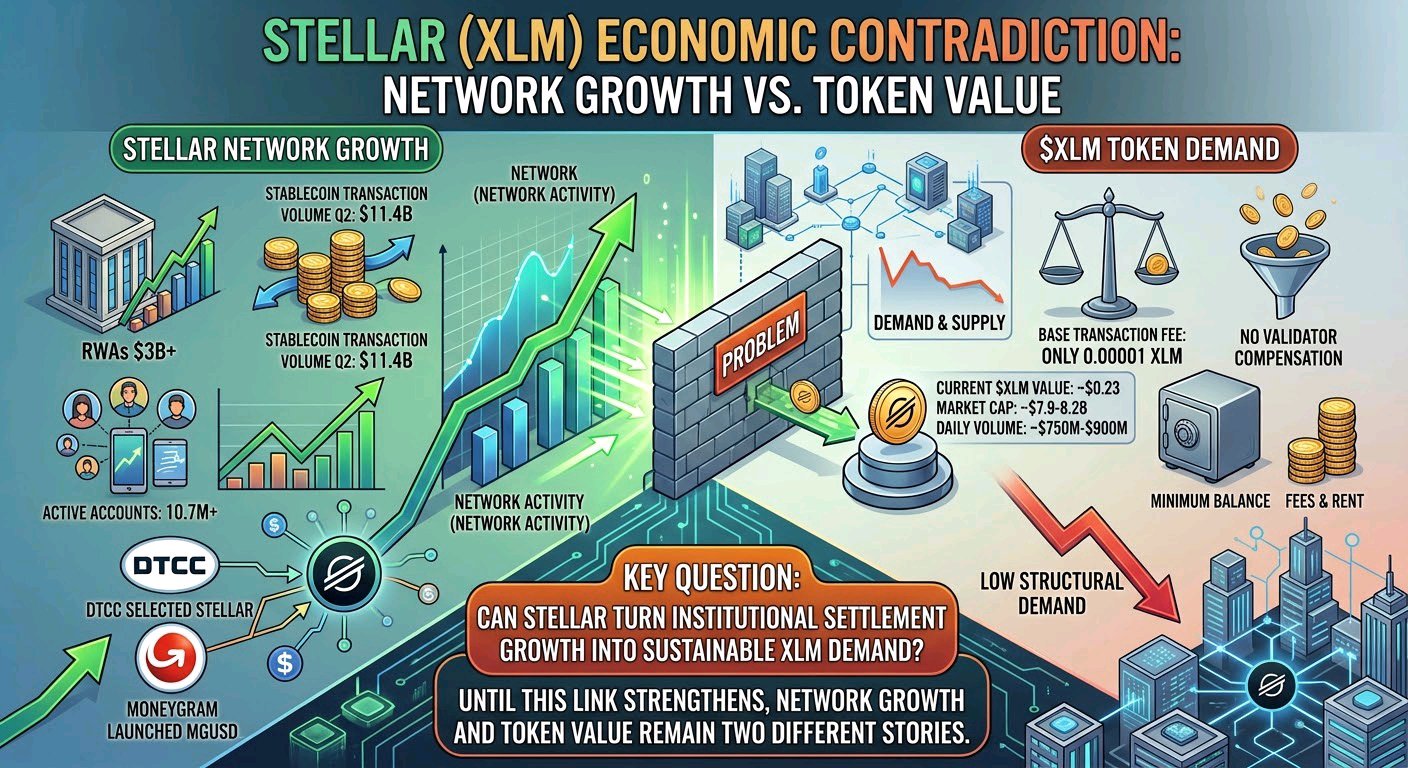
$XLMUSDT is facing a simple economic contradiction: Stellar’s network is growing faster than the value its native token captures. Stellar reported $3B+ in RWAs, $11.4B stablecoin transfer volume in Q2, and 10.7M+ active accounts. DTCC also selected Stellar among the public blockchains for tokenization, while MoneyGram launched MGUSD on the network. But here’s the problem: More activity does not automatically mean more structural demand for XLM. Stellar’s base transaction fee is only 0.00001 XLM, while validators are not financially compensated for approving transactions. XLM is mainly required for fees, rent and minimum balances. That means Stellar can become a major settlement rail while XLM captures only a tiny fraction of the economic value moving across it. Current XLM is around $0.23, with roughly $7.9–8.2B market cap and ~$750M–$900M daily volume. The next repricing needs more than adoption headlines. The key question: can Stellar turn institutional settlement growth into persistent, structural demand for XLM? Until that link strengthens, network growth and token value remain two different stories. #ByXIMPACT $LINKUSDT
$ICPUSDT s own dashboard shows roughly 4,786 TX/s, 1.16M+ canisters and 3.24M Internet Identities, while current network data shows about 567.8 ICP burned vs 3,072.8 ICP minted over the latest closed 24h period—a net emission of ~2,503.5 ICP. That matters because ICP’s economic model depends on application demand eventually converting into meaningful ICP burn. The 2026 Mission 70 proposal explicitly targets a major reduction in inflation through lower rewards and stronger demand-driven burn. So the real ICP thesis isn’t “AI narrative = bullish.” It is: Can real compute demand become strong enough to flip ICP from net inflation toward sustainable deflation? Until burn accelerates materially, growing infrastructure metrics alone don’t automatically translate into stronger token value capture. #ByXIMPACT

$GRAMUSDT MASSIVE DISTRIBUTION, LIMITED VALUE CAPTURE $GRAM is sitting near $1.60 with a ~$4.49B market cap and ~$164.6M in 24H volume. The bigger story isn’t the price — it’s the gap between Telegram’s enormous distribution and actual on-chain economic activity. Telegram has crossed 1B monthly active users, while recent data puts monthly active on-chain wallets around 1.78M. That conversion gap is the core economic contradiction. GRAM can become a major consumer-crypto settlement asset only if Telegram’s user base increasingly turns into recurring on-chain activity. The rebrand itself changes the ticker, not the economics. Binance completed the transition from TON to GRAM at a 1:1 ratio, so the market is now pricing the same underlying network under a new monetary identity. The thesis is simple: distribution is already massive; sustainable token value capture still has to catch up. Watch adoption, transaction activity and real GRAM utility — not just the narrative. #ByXIMPACT

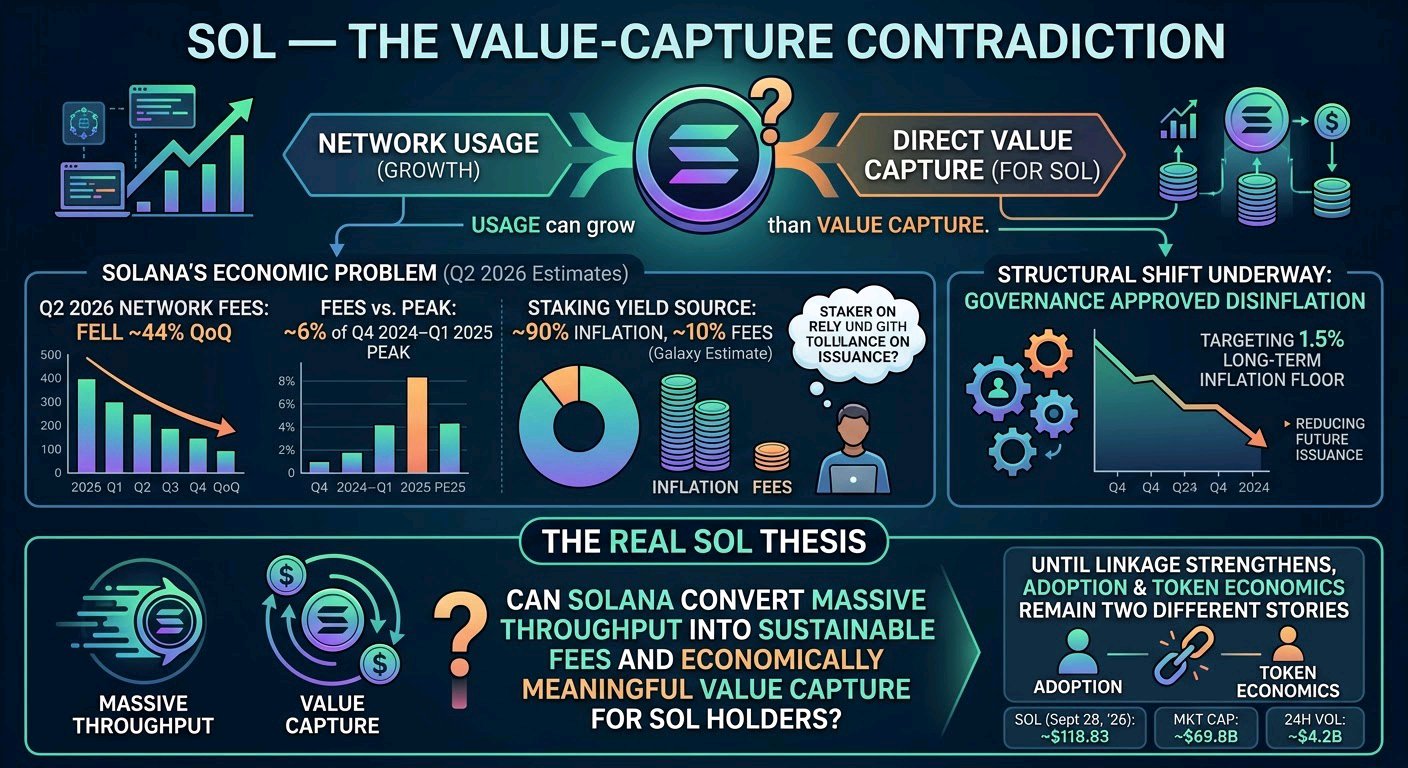
$SOLUSDT — The Value-Capture Contradiction Solana’s core economic problem is becoming clearer: network usage can grow faster than SOL’s direct value capture. As of Sept. 28, SOL is around $118.83, with roughly $69.8B market cap and $4.2B 24h volume. The contradiction is fees. Solana’s Q2 2026 network fees fell about 44% QoQ, while fees were only around 6% of the Q4 2024–Q1 2025 peak. Galaxy also estimates that roughly 90% of staking yield still comes from inflation, not organic network fees. That means SOL holders are still relying heavily on monetary issuance to support staking economics, while the protocol’s actual fee capture remains comparatively small. There is, however, a structural shift underway: Solana governance approved faster disinflation, targeting a 1.5% long-term inflation floor and reducing projected future issuance. So the real SOL thesis is not simply “more transactions = higher SOL.” It is: Can Solana convert massive throughput into sustainable fees and economically meaningful value capture for SOL holders? Until that linkage strengthens, adoption and token economics remain two different stories. #ByXIMPACT
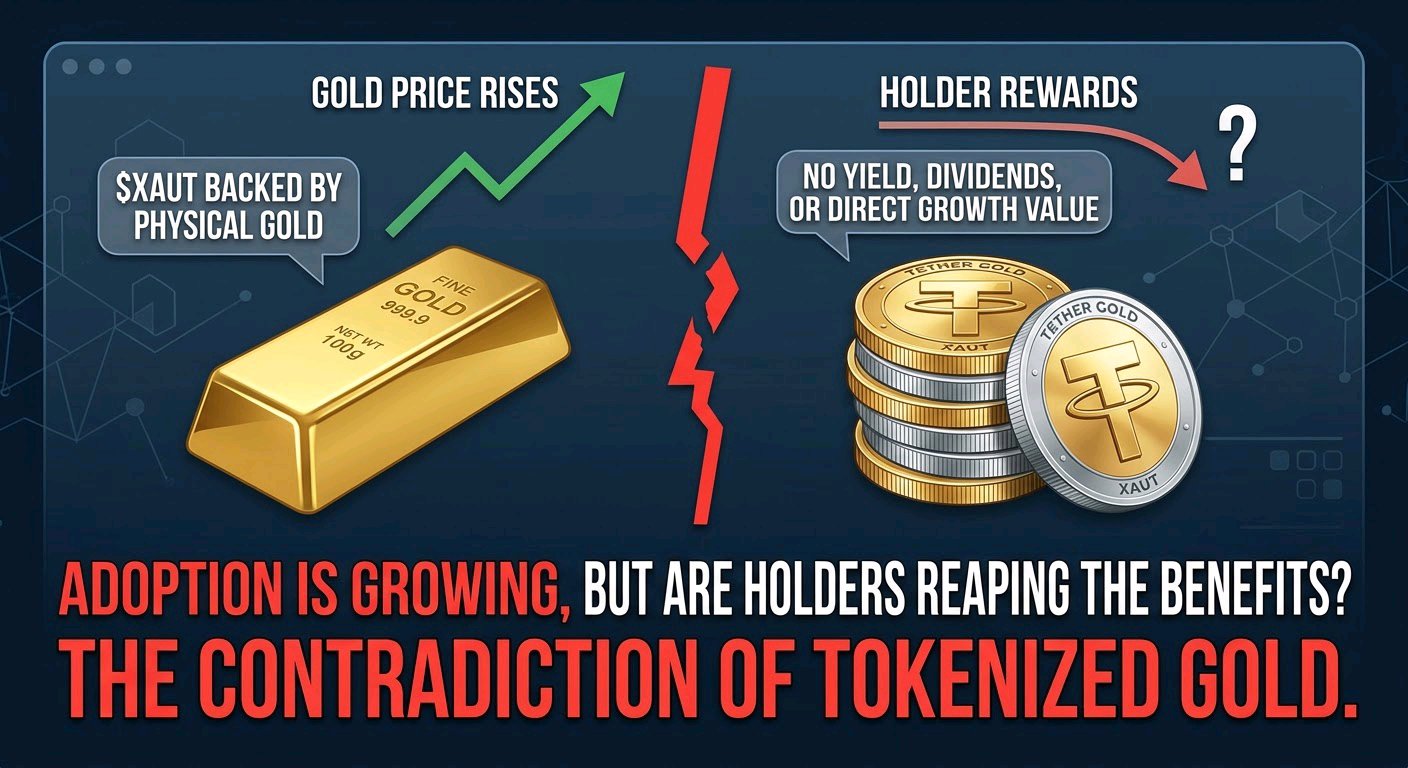
🚨 $XAUT: GOLD IS GROWING, BUT TOKEN HOLDERS FACE A DIFFERENT REALITY. Tether Gold exposes a major contradiction in the tokenized gold market: owning digital gold doesn't mean having unrestricted access to physical gold. By Q2 2026, XAUT was backed by 707,747 ounces of physical gold, worth approximately $2.84 billion. Yet its supply has no fixed cap. New tokens can enter circulation as demand grows, provided they are backed by additional gold. Here's the real economic issue: XAUT tracks gold's value, but it doesn't generate yield, pay dividends, or automatically reward holders as adoption increases. Its value proposition depends on gold prices, while its utility depends on Tether's custody, redemption terms, and centralized control. That creates a fundamental gap between growing adoption and direct value accrual. XAUT isn't designed to be a high-growth utility token. It's a digital gateway to physical gold, with issuer and redemption risks that investors cannot ignore. The real question isn't just how much gold XAUT holds. It's how much value token holders actually receive from its growing adoption. Is tokenized gold the future of finance, or simply traditional gold with blockchain access? #ByXIMPACT $XAUTUSDT
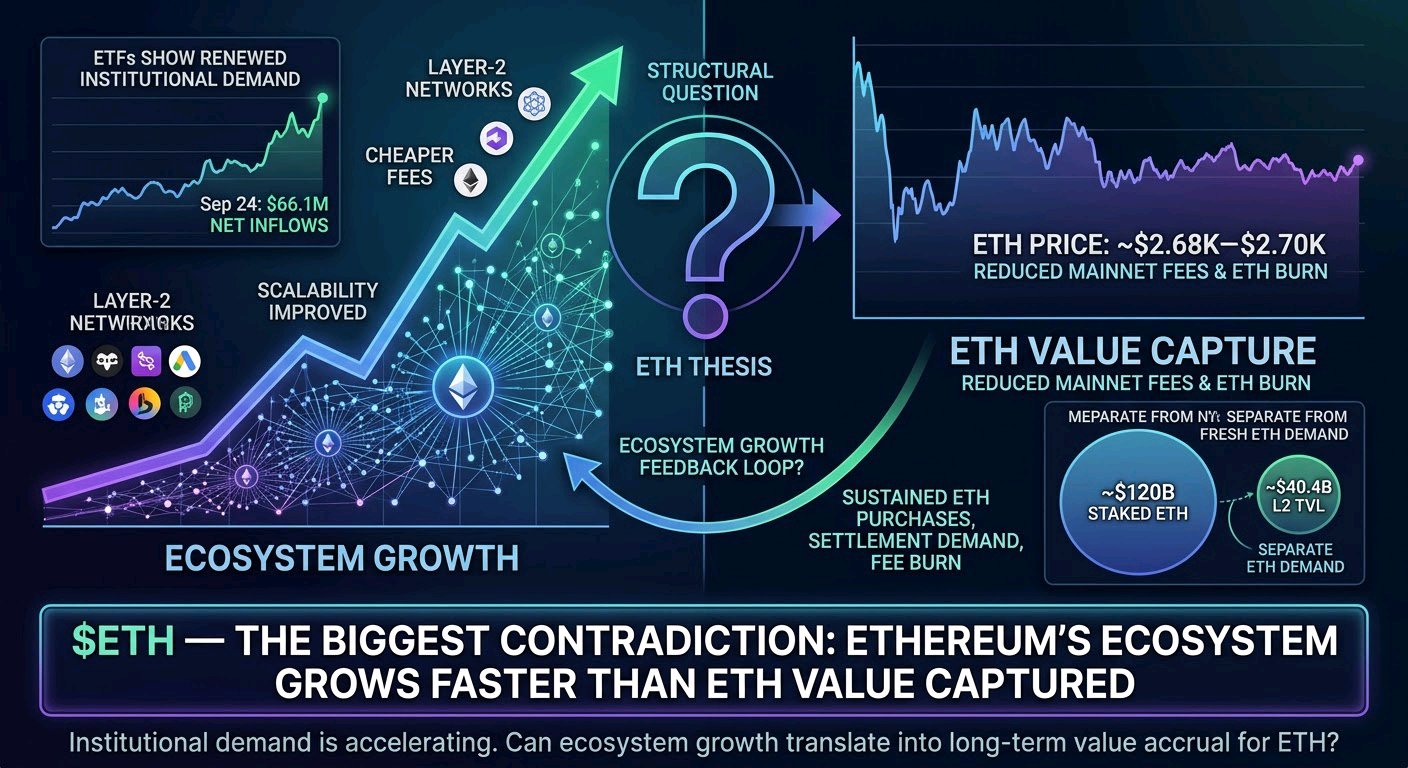
$ETHUSDT The biggest contradiction is simple: Ethereum’s ecosystem is growing faster than the value captured by ETH itself. ETH is around $2.68K–$2.70K, while U.S. spot Ethereum ETFs are showing renewed institutional demand. The latest available data shows $66.1M net inflows on Sep. 24, with roughly $602.8M flowing in over the prior week and 5.91M ETH held by tracked ETFs. But the structural question is fees. Ethereum has pushed activity toward cheaper Layer-2 networks. That improves scalability, but it can also reduce the amount of value directly captured through Ethereum mainnet fees and ETH burn. Recent data put ~$120B in staked ETH alongside ~$40.4B in L2 TVL, yet those numbers are not automatically fresh ETH demand. That creates the real ETH thesis: Institutional demand is accelerating, but ETH’s long-term value accrual still depends on whether ecosystem growth translates into sustained ETH purchases, settlement demand, and fee burn. ETF flows are proving demand exists. Now Ethereum has to prove that its expanding economy ultimately feeds back into ETH. #ByXIMPACT