
BYBIT THE COL
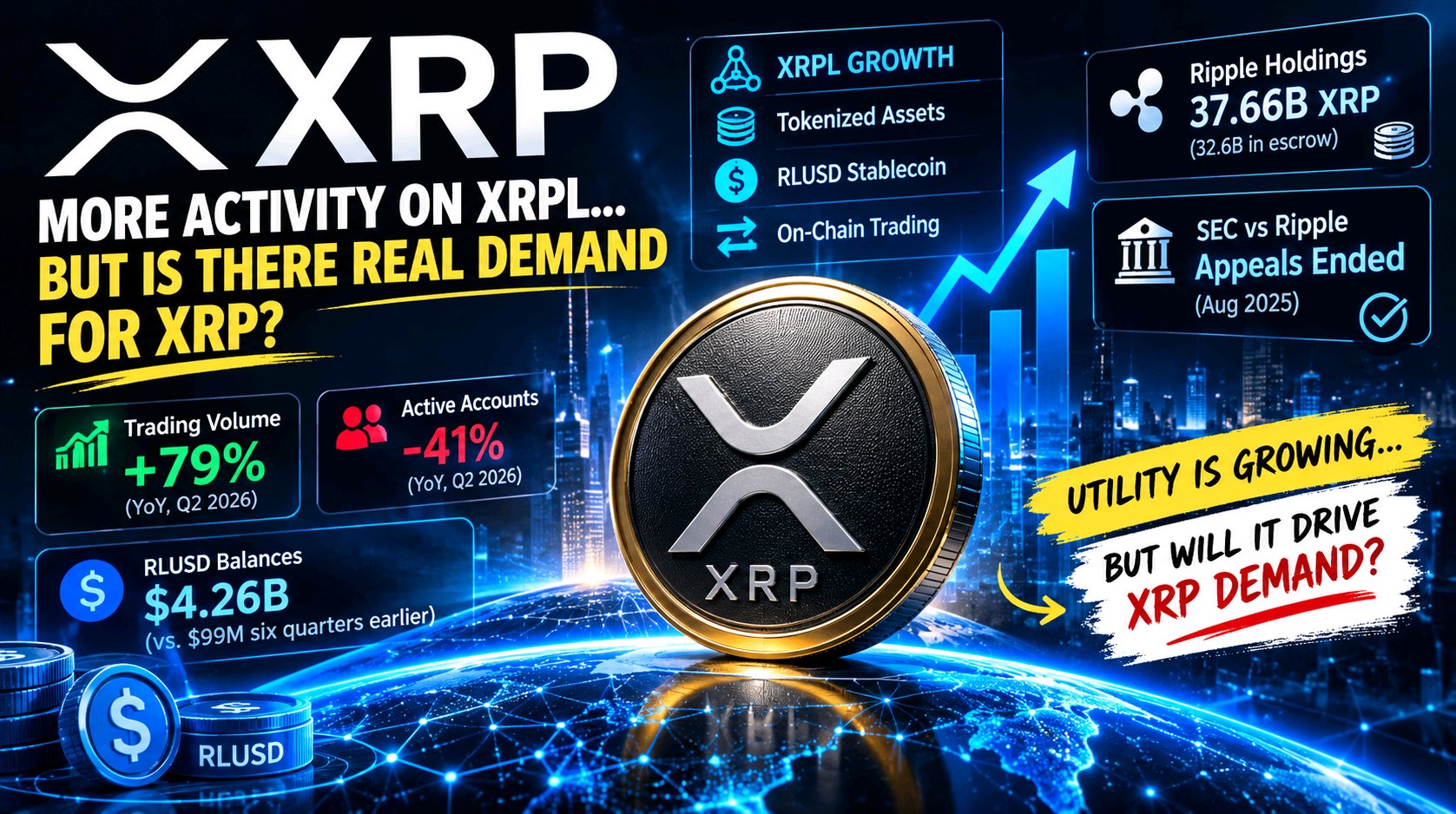
What caught my attention about XRP is that the XRP Ledger is attracting more value, but that does not automatically mean more people are using it. That distinction matters more than another bullish headline. CoinDesk reported that XRP Ledger order-book trading volume increased 79% year over year in Q2 2026, while the number of accounts initiating trades fell approximately 41%. Meanwhile, average tokenized-asset and RLUSD balances reached roughly $4.26 billion, compared with just $99 million six quarters earlier. Much of that growth came from Ripple’s dollar-backed RLUSD stablecoin. CoinDesk +1 The interesting part is how these developments connect. XRPL is building activity around tokenized assets, stablecoins and on-ledger trading, while XRP itself remains essential for transaction fees and account reserves. However, those functions do not guarantee that ecosystem growth will translate into proportional demand for XRP. xrpl.org +1 Supply also deserves attention. Ripple reported holding approximately 37.66 billion XRP, including 32.6 billion in escrow, as of June 30, 2026. Escrow releases and subsequent movements matter, but released tokens should not automatically be treated as immediate selling pressure. Ripple The regulatory picture has also changed: the SEC and Ripple ended their appeals in August 2025, while the existing judgment and injunction remained in effect. That removes one major chapter of uncertainty, not every market risk. Reuters For traders, I would watch whether rising on-ledger value is accompanied by stronger participation, sustained XRP spot volume and improving price structure. If activity keeps concentrating among fewer accounts, the growth story deserves closer scrutiny. The real question is whether expanding XRPL utility eventually creates measurable, sustained demand for XRP itself. $XRPUSDT #ByXIMPACT
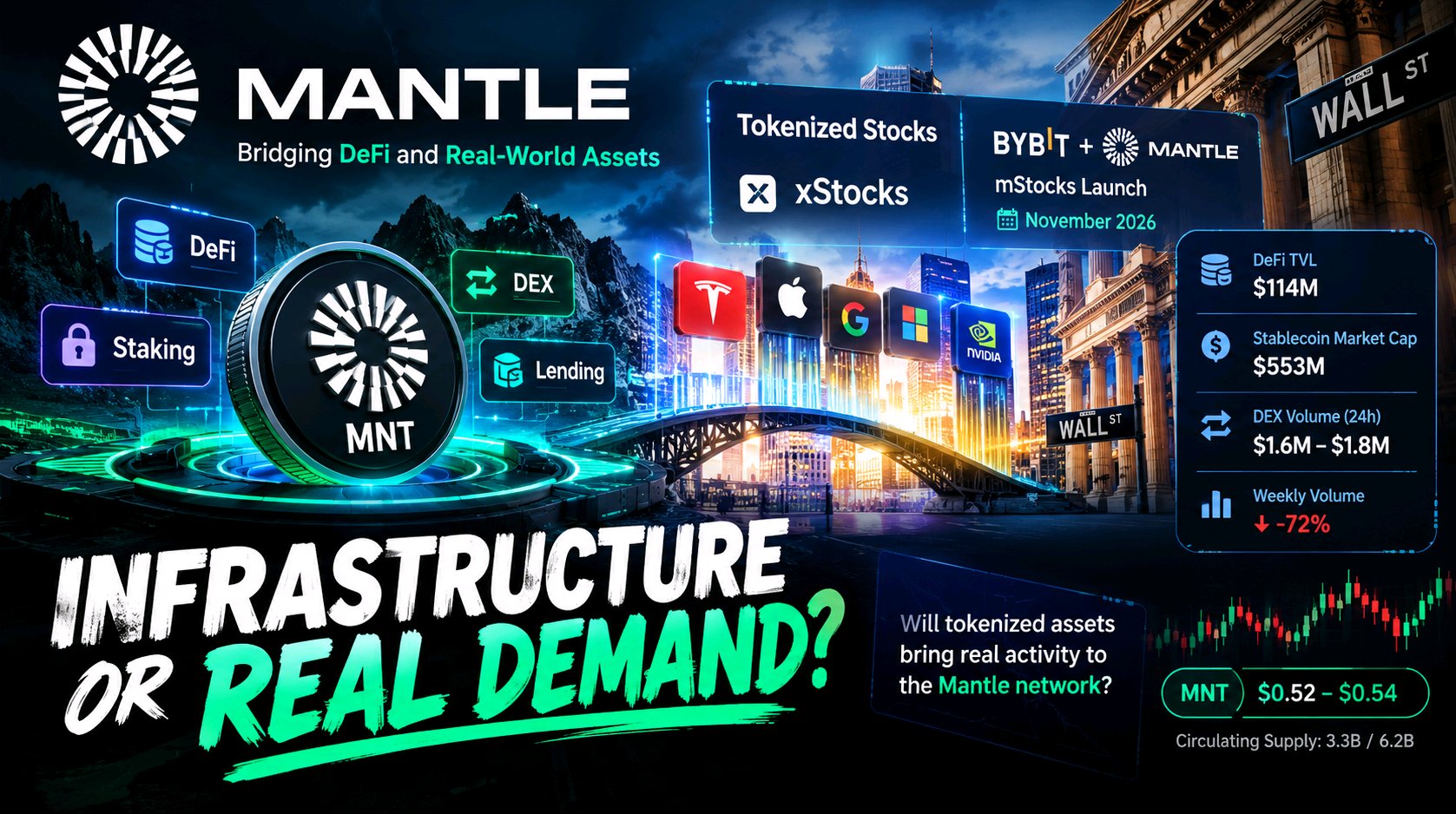
The key angle for MNT is the gap between Mantle’s broader ecosystem infrastructure and the activity currently visible in its DeFi metrics. I’ll focus the post on that distinction rather than simply presenting MNT as a bullish opportunity. What caught my attention about Mantle ($MNT) is that its next growth story may depend on whether real-world assets can bring sustained activity to the network, not just another wave of crypto speculation. Mantle already has infrastructure for on-chain trading, and its ecosystem has integrated xStocks, tokenized assets that provide exposure to equities through blockchain-based markets. In October 2026, Bybit also announced plans with Mantle to develop mStocks, a tokenized stock product targeted for November, with trading and collateral use planned across connected platforms. That creates an interesting potential bridge between traditional finance and DeFi. PR Newswire +1 But the numbers deserve a closer look. DefiLlama reported roughly $114 million in Mantle DeFi total value locked on October 28, while stablecoin market capitalization stood around $553 million. Daily DEX volume was approximately $1.6–1.8 million, with weekly volume down about 72%. These figures suggest that infrastructure and available liquidity do not automatically translate into consistent trading activity. DefiLlama +1 That distinction matters for MNT. A growing tokenized-asset ecosystem could attract users, liquidity providers, and developers, but the token’s market value still needs to be evaluated separately from the success of individual products. MNT was trading around $0.52–$0.54 in current market data, with approximately 3.3 billion tokens circulating out of a total supply near 6.2 billion. CoinMarketCap +1 The next thing I’d watch is whether mStocks launches as planned and whether DeFi liquidity, trading volume, and active participation improve afterward. Will Mantle turn its traditional-finance connections into measurable on-chain demand, or will the infrastructure grow faster than actual usage? $MNTUSDT #ByXIMPACT
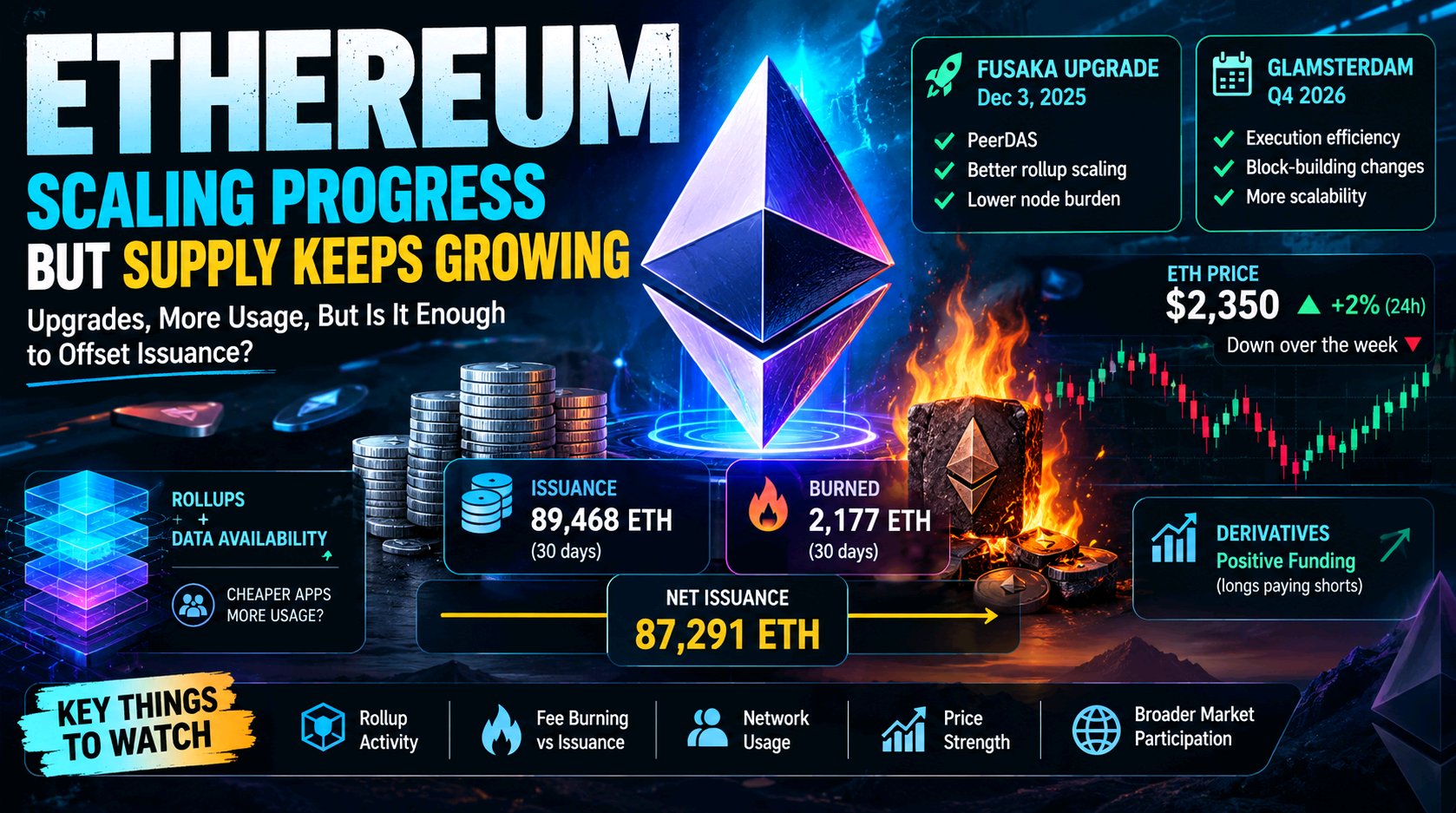
What stands out to me about Ethereum right now is the gap between its infrastructure progress and its changing supply dynamics. The network keeps improving, but those improvements do not automatically translate into stronger ETH demand. Ethereum’s Fusaka upgrade, activated on December 3, 2025, introduced PeerDAS, designed to help Ethereum scale rollup data availability while reducing the burden on individual nodes. The Ethereum Foundation also identifies Glamsterdam as a planned Q4 2026 milestone, with proposals targeting execution efficiency and block-building changes. ethereum.org +2 The economic side tells a different story. Ethereum’s proof-of-stake system issues ETH as validator rewards, while EIP-1559 burns part of transaction fees. That means ETH’s net supply depends partly on actual network activity, not a fixed scarcity schedule. ethereum.org +1 Recent figures make that distinction important. Data reported for October 27, 2026, showed approximately 89,468 ETH issued and 2,177 ETH burned over 30 days, leaving net issuance of 87,291 ETH. In other words, burning offset only a small portion of issuance during that period. InsideCrypto +1 That does not prove Ethereum is losing adoption, and it certainly does not determine ETH’s next price move. Scaling can make applications cheaper to use, but lower transaction costs can also mean less fee burning. The relationship between network growth and token economics is more complicated than a simple bullish narrative. The market data adds another layer. On October 28, ETH was trading around $2,350, up roughly 2% over 24 hours in one market snapshot, while remaining down over the previous week. Derivatives data also showed positive funding, suggesting leveraged long positions were paying shorts. COINOTAG +1 The question now is whether Ethereum’s scaling progress translates into sustained network usage and stronger fee demand, while ETH’s supply continues expanding. I would watch rollup activity, fee burning versus issuance, and whether price strength is supported by broader market participation rather than leverage alone. That combination will tell a more useful story than any single upgrade headline. $ETHUSDT #ByXIMPACT
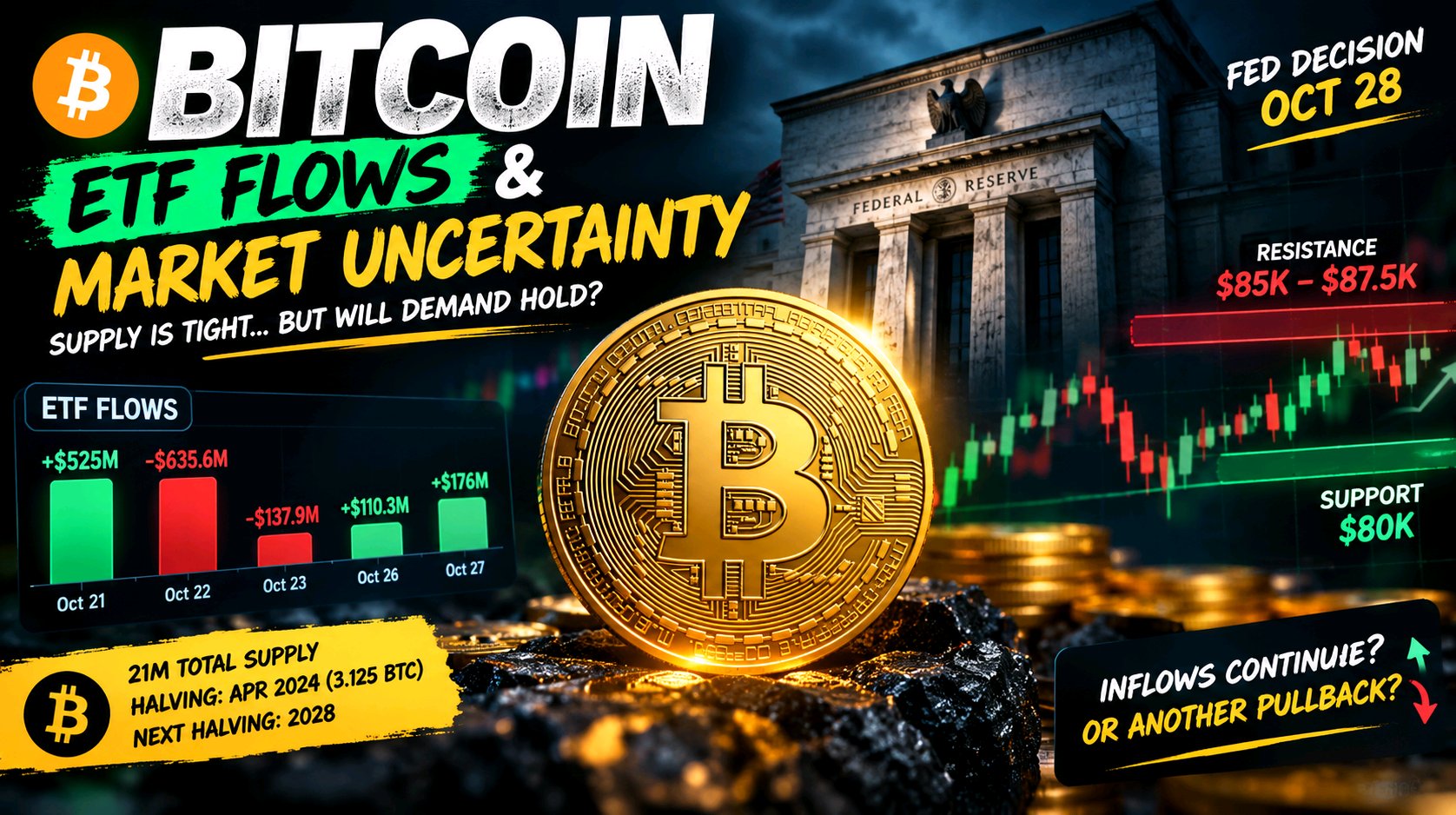
What caught my attention about Bitcoin right now is the gap between institutional demand and short-term market uncertainty. The latest ETF data shows how quickly sentiment can change, even when the bigger Bitcoin story remains intact. On October 21, US spot Bitcoin ETFs attracted roughly $525 million. The following day, they recorded approximately $635.6 million in net outflows, followed by another $137.9 million leaving on October 23. Yet inflows returned on October 26 and 27, reaching $110.3 million and $176 million respectively. That reversal is worth watching, but two positive sessions do not prove a sustained recovery. Bitcoin Almanack +1 The interesting part is how this demand interacts with Bitcoin's supply structure. Its protocol caps issuance at 21 million BTC, while the April 2024 halving reduced the block subsidy to 3.125 BTC. The next halving is expected in 2028. However, limited new supply alone cannot guarantee higher prices; existing holders can still sell, and demand can weaken. Bitcoin +1 That is why I think the current market needs more than a bullish narrative. Bitcoin has been testing the $80,000 area, while analysts have identified potential overhead resistance around $85,000–$87,500. Meanwhile, the Federal Reserve's October 28 decision adds another macro variable that could shift risk appetite. Coincall +1 The key question now is whether ETF inflows continue while BTC holds support and spot demand strengthens. If flows fade again, the recent recovery could struggle. If demand persists and price breaks resistance with convincing volume, the picture becomes more constructive. I'd watch the confirmation, not just the headline. $BTCUSDT #ByXIMPACT
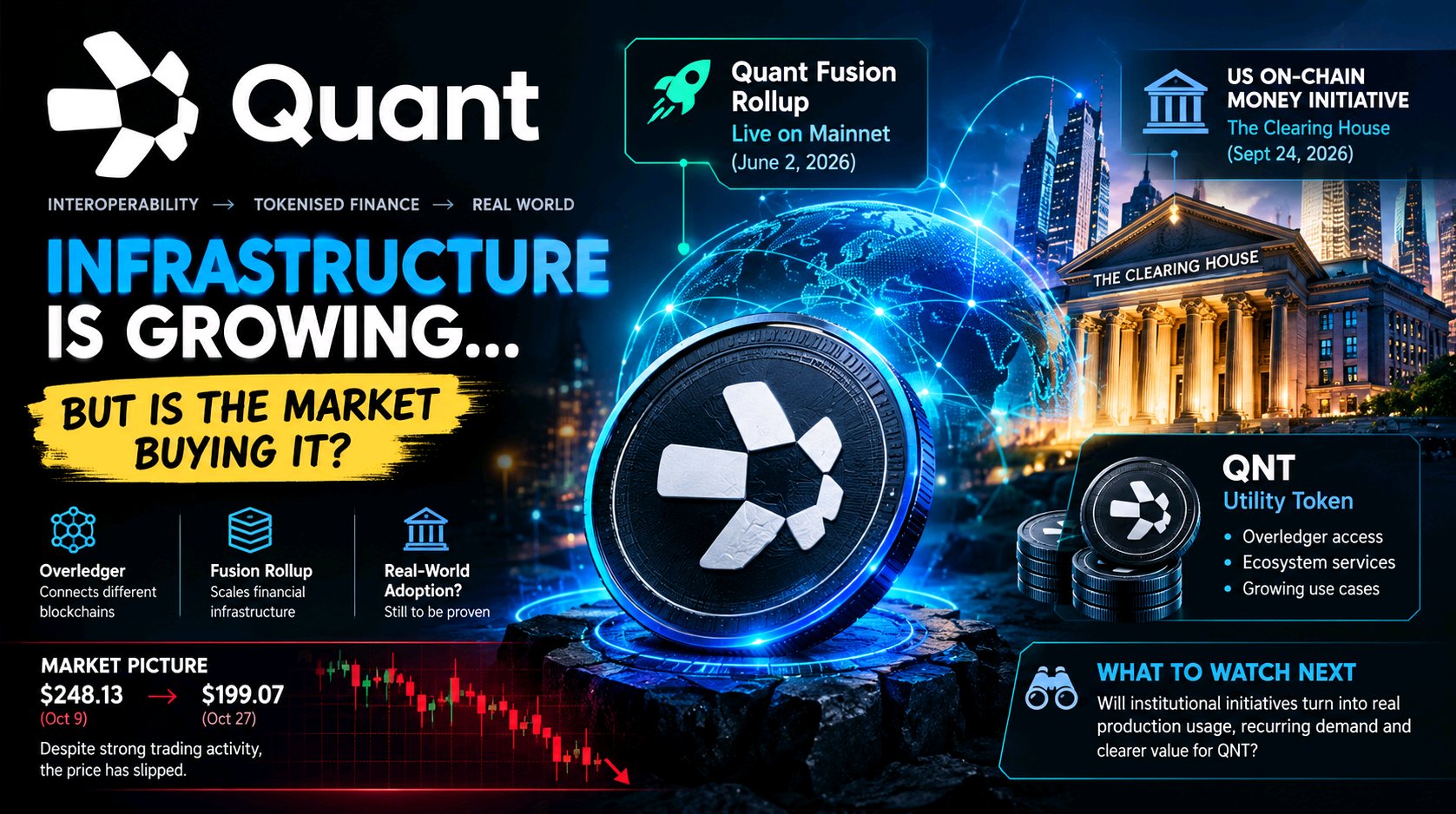
What stands out about Quant is that its story is moving beyond blockchain interoperability into the infrastructure needed for tokenised money and financial markets. Its official updates highlight the September 24, 2026, announcement about The Clearing House’s US on-chain money initiative, alongside the June launch of Quant Fusion Rollup on mainnet. These are meaningful developments to investigate, but announcements alone do not prove widespread adoption. The future of finance. Today. The interesting part about Quant ($QNT) is that its infrastructure story is becoming more concrete, but the market still needs to distinguish real adoption from announcements. Quant’s Overledger focuses on connecting different distributed ledger networks, while Quant Fusion extends its ambitions into financial infrastructure. On June 2, 2026, Quant announced that its Fusion Rollup was live on mainnet. Then, on September 24, it announced involvement in The Clearing House’s US on-chain money initiative. Those developments suggest a stronger focus on connecting blockchain technology with existing financial systems, although their long-term commercial impact remains to be demonstrated. The future of finance. Today. +1 The QNT token is another important part of the story. CoinMarketCap identifies it as a utility token associated with Quant’s ecosystem, including Overledger access and services. However, expanding infrastructure does not automatically translate into proportional token demand. Actual usage, licensing requirements and the way customers acquire and use QNT matter far more than headlines. CoinMarketCap +1 The market picture adds another layer. CoinGecko’s historical data shows QNT closing near $248.13 on October 9, compared with $199.07 on October 27, despite substantial trading activity during the period. That decline suggests the market has not maintained its earlier valuation, even as Quant continues announcing developments. CoinGecko What I would watch next is whether institutional initiatives translate into measurable production usage, recurring commercial demand and clearer evidence of QNT’s economic role. Until those pieces connect, Quant’s infrastructure progress is interesting, but the token’s long-term value story remains a question rather than a proven outcome. $QNTUSDT #ByXIMPACT
What stands out about Solana right now is the gap between network activity and market momentum. The network is still processing substantial activity, but that alone does not guarantee stronger demand for SOL. According to DefiLlama, on October 26, Solana recorded approximately $5.69 billion in DeFi total value locked, $15.57 billion in stablecoin market capitalization, and $1.64 billion in daily decentralized exchange volume. Yet weekly DEX volume was down around 9.3%, while perpetual futures volume had fallen roughly 32.5% over seven days. That combination matters. Solana can remain an important venue for on-chain trading while speculative activity cools. TVL and stablecoin balances provide context about capital in the ecosystem, but they do not independently prove that SOL itself is attracting sustained buying pressure. The market is reflecting that cooling. SOL traded near $100 on October 27, after closing around $100.76 the previous day. Meanwhile, Binance perpetual data showed open interest near $899 million, rising 2.2% in 24 hours even as price slipped. Around 76% of accounts were positioned long, with positive funding. That is the part I would watch carefully. Rising open interest during a decline can mean new positions are entering, but it does not reveal their full intent. Crowded long positioning can also make a recovery vulnerable to liquidations if price continues lower. SOL's underlying utility remains relevant: Solana transaction fees are paid in SOL, and its base fee is split between burning and validators. Still, network usage and token price are not interchangeable. For me, the next signal is whether DEX activity stabilizes and SOL can reclaim lost ground with stronger spot volume, rather than relying on leveraged positioning. If open interest rises while price weakens further, I would treat that as a risk signal, not automatic evidence of accumulation. The question is whether real ecosystem demand can strengthen while speculative activity cools. That distinction could matter more than any single headline. $SOLUSDT #ByXIMPACT
